

Mar 30
Gamer Roof
There is a very specific feeling that comes with running into an ex somewhere you did not expect. Your stomach does something complicated. You say something that comes out wrong. You leave wishing you had said something completely different. You replay it for days.
High Times built an entire game out of that feeling and made you a donut shop owner in the middle of it.
Developed and published by Yangyang Mobile, High Times is a cooking and dating simulation game set in a specialty café called The Hotbox in the fictional town of San Mazo. The game is slated for release in Q1 2026 on Steam, available for both Windows PC and macOS. On the surface it is a café management game where you prepare and serve donuts to a rotating cast of customers. One level deeper, it is a relationship game about unfinished business and the people who carry it back to your front door.
The twist that makes everything interesting is that the donuts are not ordinary food. Each one is infused with a mood enhancing substance that alters the emotional state of whoever eats it. You are not just a baker. You are something closer to a therapist with a fryer, and your customers are people who genuinely need help even when they do not know how to ask for it.
Some of those customers happen to be people you used to love.
The World High Times Is Set In
San Mazo is the kind of town where everyone seems to end up back eventually. It is fictional but it feels familiar, the type of place small enough that your past catches up with you whether you want it to or not.
The Hotbox sits at the center of the story. It is described as a special donut shop, and that word special does real work here. The donuts sold here are legally infused with mood enhancers in this world. It is not framed as something underground or shady. People come here intentionally because they want to feel differently than they currently do. They want courage for a hard conversation. They want patience to get through something. They want to feel nostalgic for a reason they cannot fully explain.
You are the one who decides what they get.
That is the job. Read the person in front of you. Figure out what they actually need. Pick the flavor that serves that need. And then live with the result of that call, because your decisions have consequences that ripple through the rest of the game.
I appreciate that the world-building here does not waste time justifying itself. Mood-altering donuts exist. That is the premise. The game moves forward from there and uses that premise to ask something real: if you could give someone exactly the emotion they needed in a hard moment, would you always know which one that was?
How the Mood Enhancer System Actually Works
Each donut flavor in High Times corresponds to a specific emotional state. The confirmed emotions from Yangyang Mobile ahead of launch include patience, sincerity, nostalgia, and courage. Additional flavors are expected to unlock as the game progresses, tied to new recipes and ingredients you discover through gameplay.
When a customer eats a donut, their emotional state shifts. That shift changes what they say, how they behave, and what dialogue options become available to you. This is not a cosmetic change. The emotional state of a customer determines what paths the conversation can go down. Serve the wrong mood and you might close off a conversation thread that was just starting to open. Serve the right one and something important gets said that would not have come out otherwise.
The system works on a few levels. During lighter customer interactions it functions as a puzzle. You gather information from what they tell you, make a read on what they need, and serve accordingly. During the heavier story moments with your exes it becomes something more uncomfortable, because you know these people. You know their patterns. You think you know what they need. But the game does not always reward that assumption, which is honest in a way that a lot of games are not.
What I find genuinely smart about this design is that it ties the cooking mechanic directly to the emotional narrative. The two sides of the game are not separate. Making the right donut is not a disconnected mini-game. It is the actual tool you use to navigate your relationships. That kind of integration makes both sides of the game feel more meaningful.
Café Management: What Running The Hotbox Actually Involves
The business side of High Times is its own complete system. You are not just clicking through dialogue in a shop window backdrop. You are running an actual café with real operational demands.
Donut Preparation
Making donuts involves selecting ingredients, following recipes, and decorating the finished product. The quality of what you make affects customer satisfaction and the tips you earn. Early in the game your options are limited. You work with a basic menu and standard ingredients. As you unlock new tools and discover new recipes through gameplay, the possibilities expand.
Decoration is part of the process. The visual presentation of a donut is not just for show. Certain customers respond to how something looks before they taste it, which adds another variable to the customer satisfaction equation.
Service Management
During active service periods you are handling multiple customers simultaneously. Each one has needs, preferences, and in some cases a mood state you are trying to shift. Managing the queue while keeping quality consistent adds time pressure to the decision-making process.
This timing element matters because it changes the emotional texture of the gameplay. Outside of service hours you can think carefully about a conversation. During service you are moving fast and making calls under pressure. That rhythm of careful reflection followed by on-the-spot decision making is something I find surprisingly effective as a design choice.
Tips, Upgrades, and Progression
Tips earned from satisfied customers feed into the upgrade system. You reinvest earnings into the shop itself, unlocking new equipment, better ingredients, and expanded menu options. The upgrade loop is designed to feel rewarding rather than obligatory, and the unlocks directly affect what emotional tools you have available for customer interactions.
Discovering new recipes is part of the exploration element. Some recipes are found through experimentation. Others unlock through relationship progression with specific characters. This creates an incentive to invest in your customer relationships beyond the story beats alone.
Your Exes: The Real Core of the Game
High Times gives you multiple former partners who have all returned to San Mazo and all end up as customers at The Hotbox. The game calls this a closure simulator, and that framing is both accurate and a little pointed, because it then immediately makes clear that closure is not a mood on the menu.
These are not easy characters to deal with. They remember things. They have their version of what happened between you, and it might not match yours. The conversations you have with them across the course of the game are built on that gap between what actually happened and what each person carries forward from it.
You get a chance to say things that were never said. Whether that goes well depends on what you say and how you say it and which emotional state you created with the donut you served them. The game tracks everything. A comment you make in an early conversation can resurface three sessions later in a way that changes how an interaction lands.
Multiple endings are confirmed for each major relationship arc. You can walk away from a former partner with things still unresolved. You can rebuild something into a friendship. In some cases you can rekindle an old romance. The game does not push you toward any single outcome. It responds to what you actually do.
That lack of a prescribed happy ending is one of the things that makes this game feel different from a standard dating sim. You are not working toward unlocking a romance route. You are working through something, and the destination depends entirely on who you choose to be in those moments.
The Side Characters of San Mazo
Beyond the main relationship arcs, San Mazo is full of characters who are there for their own complicated reasons. Yangyang Mobile describes them as misfits, and the examples given back that up. The confirmed cast includes a self-described mommy lover and a woman who arrives at the café in a chicken suit.
These characters lighten the tone when the story needs it, but they are not just comic relief. Each one has a backstory, a favorite donut, and something going on beneath the surface that you can uncover by serving them consistently and paying attention to what they actually say.
Also Read
Glory To The Heroes Game Guide: Real War Gameplay, Controls, Story Mode, Features and Full Breakdown
Glory To The Heroes Game Guide: Real War Gameplay, Controls, Story Mode, Features and Full Breakdown
Building relationships with side characters is its own reward track. Their stories add texture to the world of San Mazo and provide a counterbalance to the heavier emotional work happening with your exes. The shift between those two registers, absurdist humor and genuine emotional weight, is something Yangyang Mobile handled well in their previous work and appears to be a core part of the design philosophy here.
Character Customization Options
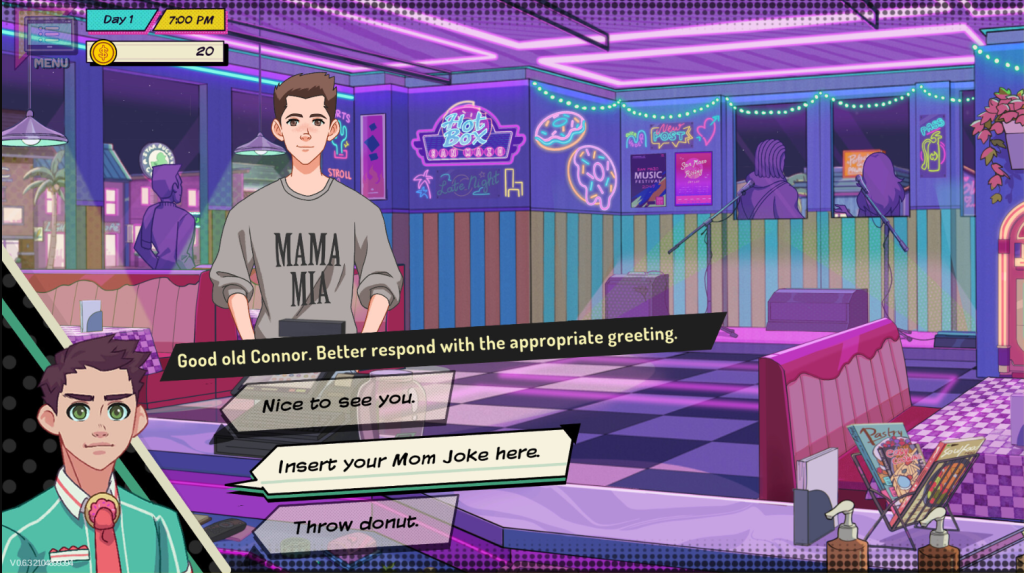
You design your own character at the start of the game. The options include choosing a male or female presentation and customizing physical appearance including skin color and hairstyle. The customization screen is described as meaningful to the experience rather than a formality before the real game starts.
Your character does not speak. Every other named character in High Times is voiced in English by professional voice actors, but your character communicates through the choices you make rather than a performed voice. This is a deliberate design choice. It keeps the player positioned inside the experience rather than watching it happen to someone else. The words on screen feel like your words because no one else has put a voice to them.
That choice also means the game can support a wider range of player identity without needing to script alternate voice lines for every possible background. What matters is the choices, not the voice behind them.
Visual Style and Audio Design
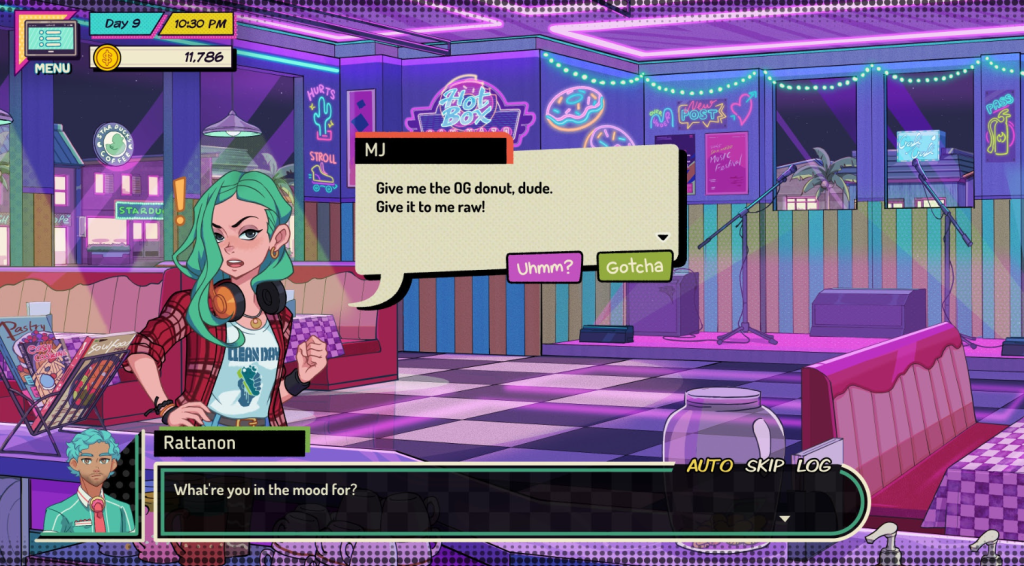
The art direction in High Times leans into a dynamic comic book style. The game features more than 50 animated panels and a set of vibrant illustrated CG images for key story moments. Comic book paneling is a natural fit for this kind of game because it handles emotional beats well visually. A character’s expression filling a panel carries a different weight than the same expression rendered in a standard game portrait.
The animation in the panels keeps the visual experience from feeling static. Story moments play out with movement rather than just held images, which adds energy to dialogue scenes that might otherwise drag.
The soundtrack is a blend of original grunge and lo-fi compositions. Lo-fi has become a genre shorthand for a certain introspective mood, which fits the quieter moments of the game. The grunge influence adds some roughness and emotional texture to that, which fits the parts of the story dealing with past damage and unresolved tension. A purely soft soundtrack would undercut some of what the story is doing. The grunge element keeps it honest.
Complete Controller and Keyboard Guide for High Times on PC and Xbox
High Times is designed for relaxed, thoughtful play. The control scheme reflects that. Here is a full breakdown of both Xbox controller and PC keyboard inputs so you can set yourself up comfortably before you start.
Xbox Controller: Full Button Map
A Button – Confirm any selection. Advance dialogue. Interact with objects in the café during service. This button does the most work throughout the game.
B Button – Cancel or go back. Returns you to the previous menu screen. In conversation, pressing B before committing to a dialogue option backs you out so you can reconsider.
X Button – Inspect or examine. During prep this lets you look closely at an ingredient or piece of equipment. In some scenes it accesses a character’s profile card.
Y Button – Open your recipe book during donut preparation. You can pull this up mid-service to check a customer’s documented preferences without leaving the service view.
Left Bumper (LB) – Cycle left through available donut flavors or topping options while crafting. Also used to tab left across sections in multi-tab menus.
Right Bumper (RB) – Cycle right through options during crafting. Tab right in menus.
Left Trigger (LT) – Hold to display the relationship meter for the current customer. Shows your history with that character, recent mood changes, and the direction your relationship is trending.
Right Trigger (RT) – Fast-forward through dialogue you have already seen. Useful when replaying scenes to explore different choices without sitting through the full sequence again.
Left Stick (Move) – Navigate menus, move the cursor during character customization, and scroll through dialogue history when held upward.
Right Stick (Move) – Pan the camera around the café during downtime between service sessions. Useful for examining decorations and upgrades you have installed.
D-Pad Up – Open the emotion selection wheel. This is where you choose which mood donut to prepare for the current customer before locking in your decision.
D-Pad Down – Open the tips and earnings summary for the current service session.
D-Pad Left – Quick access to the shop upgrade menu. Only available during downtime between service periods.
D-Pad Right – View the current customer queue and a general emotional state indicator for each person waiting.
Menu Button (Start) – Opens the main pause menu including settings, save, load, and quit to main menu options.
View Button (Select) – Opens the story journal. This log tracks completed conversations, relationship status changes, and key story events you have experienced so far.
Left Stick Click (L3) – Toggle between standard and focused service mode. Focused mode extends the service timer slightly, giving you extra time to think through each decision during busy periods.
Right Stick Click (R3) – Snap the camera back to its default position in the café view.
PC Keyboard and Mouse: Full Input Map
Left Mouse Click or Enter – Confirm selection, advance dialogue, interact with any object in the café.
Right Mouse Click or Escape – Cancel current action, go back one screen, open pause menu from gameplay.
W A S D or Arrow Keys – Navigate dialogue choice menus and screen-level menus.
Tab – Cycle forward through available donut flavors and decoration options during preparation mode.
Shift + Tab – Cycle backward through available options during preparation.
R – Open recipe book while in prep mode.
E – Inspect or examine the item currently under your cursor.
Q – View relationship status for the character currently on screen.
F – Open the emotion selection wheel to choose which mood donut to prepare.
G – Open the story journal from any non-service screen.
T – View the active customer queue during service.
U – Open the shop upgrade menu during downtime.
Space Bar – Speed through dialogue you have already read in a previous playthrough.
Ctrl + S – Quick save at any available save point.
Ctrl + L – Open the load game menu.
Mouse Scroll Wheel Up or Down – Scroll through dialogue history to review earlier lines in a conversation.
Middle Mouse Button – Reset camera to default position in the café overview.
1, 2, 3, 4 – Shortcut keys to select the first four dialogue options directly without using the mouse. Speeds up choices during familiar scenes on replays.
H – Toggle the HUD display on or off during cutscenes for a cleaner viewing experience.
Note: These mappings follow standard genre conventions for Yangyang Mobile titles and visual novel café management games. The final key assignments will be available in the official settings menu and are expected to support full remapping at launch.
PC System Requirements: What You Actually Need
High Times runs on modest hardware. The minimum specifications are as follows:
- Operating System: Windows 10 or Windows 11 (Steam requires Windows 10 minimum since January 2024). macOS also supported.
- Processor: 2 GHz or faster
- Memory: 3 GB RAM
- Graphics: NVIDIA GTX 660 or equivalent
- DirectX: Version 10
- Storage: 5 GB available space
These requirements will not challenge any machine built in the last ten years. High Times is built for accessibility. The game’s priority is storytelling and emotional delivery, not graphical output. If your PC can run a web browser and a video player without trouble, it can run this game.
The 5 GB storage footprint is reasonable for a title with full English voice acting, animated comic panels, CG artwork, and an original music soundtrack.
How High Times Fits Into the Yangyang Mobile Catalog
Yangyang Mobile made their reputation with When the Night Comes, a visual novel that earned consistent praise for the quality of its character writing and its willingness to treat emotional complexity without reducing it to simple mechanics or tidy resolutions.
High Times carries that same philosophy forward and builds a more elaborate game around it. The addition of café management, the cooking mechanics, the mood donut system, and the multiple endings structure represent a meaningful expansion of scope compared to a straight visual novel. The studio is not playing it safe. They are building something more ambitious and betting that the character writing and emotional honesty that worked before will carry through a more complex game structure.
That is a reasonable bet. The most common criticism of narrative games with added simulation mechanics is that the two sides feel disconnected. High Times avoids that trap by design. The cooking and the emotions are the same system. What you make determines how people feel. That integration keeps both sides relevant throughout the game.
Who Will Get the Most Out of High Times
Players who enjoy visual novels and dating sims already have an obvious reason to be interested. But High Times is positioned to reach beyond that core audience.
People who enjoy café management games like Coffee Talk or the Diner Dash series will find familiar rhythms in the service loop. The difference is that the customers here have emotional stakes that extend beyond satisfaction ratings. That added layer gives the management side more weight.
Players who liked games dealing with relationship history and emotional aftermath, things like Boyfriend Dungeon or Arcade Spirits, will connect with the closure-centered narrative structure. High Times is direct about the fact that it is not a fantasy of new romance. It is something harder and more real than that.
I also think this game will resonate with people who do not typically play in this genre but who have some unresolved emotional business of their own. Games that let you practice difficult conversations in a low-stakes environment are genuinely useful. Not as therapy exactly, but as a way of thinking through how you handle connection and conflict. High Times seems designed to make you think, not just to entertain you.
Frequently Asked Questions
What kind of game is High Times exactly?
High Times is a hybrid of café management simulation, cooking game, dating sim, and visual novel. You run a donut shop where the donuts are infused with mood-altering substances. The cooking and management gameplay is intertwined with a narrative about facing your exes and helping troubled customers work through their problems.
Who is making High Times?
Yangyang Mobile is both the developer and publisher. They are an independent studio known for the visual novel When the Night Comes. High Times is their most mechanically ambitious project to date.
When does High Times come out?
The confirmed release window is Q1 2026. A specific date has not been announced. Wishlisting the game on Steam is the most reliable way to get notified when the exact date drops.
What platforms can I play High Times on?
High Times is confirmed for PC via Steam on Windows and macOS. No console version has been announced. For Windows users, Steam now requires Windows 10 or later, so Windows 7 and 8 are no longer supported through the platform even though the game’s minimum spec lists them.
How does the mood donut system work?
Each donut flavor corresponds to a specific emotion such as patience, sincerity, courage, or nostalgia. Serving a customer a particular flavor shifts their emotional state during that scene. Their dialogue changes based on how they feel, which opens or closes different conversation paths. Choosing the right mood for the right moment is the core puzzle of the game.
Are the choices in High Times permanent?
Yes, within a playthrough your choices are remembered. The game tracks what you say to each character and responses change based on your history with them. Because multiple endings are confirmed, you can replay the game and make different choices to see how the story and relationships change.
Can you romance characters in High Times?
Yes. Rekindling a past romance is one of the confirmed possible outcomes with your former partners. However it is not the only outcome, and nothing in the game pushes you toward romance as the default goal. You can also resolve things as friends or leave certain things unresolved depending on your choices.
Does High Times have voice acting?
Yes. All named characters except the player character have full English voice acting performed by professional voice actors. Your character communicates through player choices rather than spoken dialogue.
How long does a playthrough of High Times take?
No official estimate has been released. Games in this genre with comparable scope typically run 10 to 20 hours for a single playthrough. Given the confirmed multiple endings and branching relationship paths, a full completion across different routes would likely add significant additional time.
Is High Times good for players new to dating sims?
Yes. The cooking and café management side provides accessible gameplay that does not require familiarity with the visual novel format. The emotional themes are universal even if the genre is not familiar. High Times is approachable but it has enough depth to reward players who go deeper into it.
Can I play High Times with a controller on PC?
Yes. The game supports Xbox controller input on PC. The full button layout is covered in the controller guide section above. Keyboard and mouse input is also fully supported.
What happens if I serve a customer the wrong mood donut?
The conversation takes a different direction. Some wrong calls create friction or close off paths that would have been available otherwise. The game does not immediately punish you, but choices compound over time, so a series of misread moments can shift a relationship in a direction you did not intend. This is part of what makes repeat playthroughs interesting.
Is there a demo available for High Times?
No demo has been announced ahead of the Q1 2026 release. Check the Steam page closer to launch for any demo or early access updates from Yangyang Mobile.
What is the relationship between cooking quality and the story?
The quality of the donuts you make affects customer satisfaction and tips earned, which feed into shop upgrades and unlock new flavors. New flavors expand your emotional toolkit for customer interactions. Poor quality work limits your options over time. The two systems are connected throughout the game.
Will High Times be available in languages other than English?
Language support beyond English has not been officially confirmed ahead of launch. Yangyang Mobile’s previous titles supported multiple languages. Check the Steam listing for the confirmed localization options at launch.
What age rating is expected for High Times?
No official age rating has been confirmed. The subject matter involves relationship history, emotional complexity, and mature themes around closure and past hurt. The game is best suited to older teenagers and adults. Check the Steam content rating and any ESRB or PEGI classification posted at launch before purchasing for younger players.
Helpful External Resources
- Steam – The primary platform for High Times. Add to your wishlist for release notifications and check for pricing and content descriptions at launch.
- PCGamingWiki – Technical compatibility notes, community workarounds, and detailed system support information will be available here after launch.
- HowLongToBeat – Community-submitted playtime estimates across main story, completionist, and all-endings runs. Check here after release to plan your time.
- Visual Novel Database – Genre classification, developer history, and catalogued release information for visual novel and hybrid titles including Yangyang Mobile’s catalog.
- IGDB – Comprehensive game database with release tracking, franchise connections, and platform information.
High Times is doing something that most games in its genre do not attempt. It is using a playful, slightly absurd premise, donuts that change how you feel, to get somewhere honest about what happens after relationships end. The cooking is real. The management is real. But the emotional work underneath all of it is what the game is actually about.
Running into your past is not comfortable. Having the tools to navigate it thoughtfully, even fictional donut-shaped tools, is something most of us could use practice with. High Times offers that practice inside a game that is clearly made with care.
Q1 2026 is not far off. It is worth paying attention to.