

I was reading this whole story about a playground injury, and frankly, I relate to some of it from my school days. Kids lose it sometimes. I have seen children fight over petty issues like songs or who gets to go first on the slide. Things reach a boiling point very quickly.
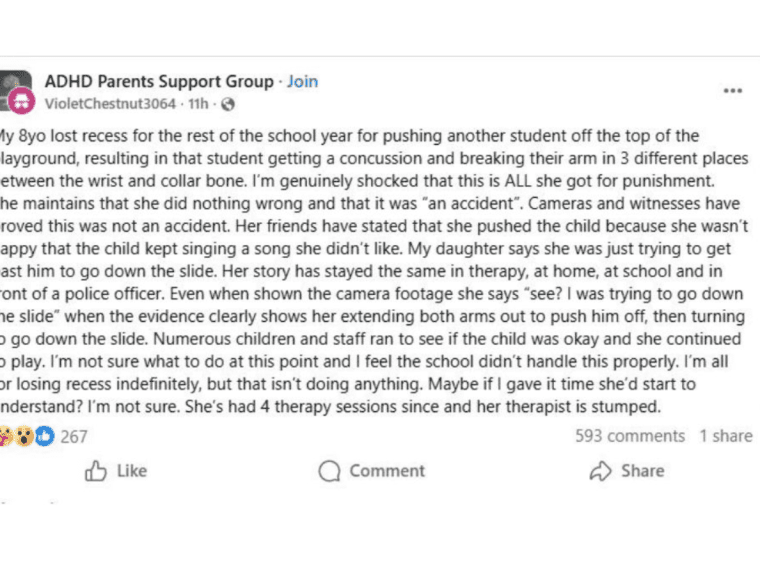
In one post from a parent on a support group for ADHD, she relayed the story of her eight-year-old daughter, who missed recess for the rest of the school year because she pushed the other child off the top of a playground structure. The fall was quite serious. That child suffered a concussion and a whole bunch of fractures from the wrist area all the way to the collarbone. In reading that part, I started to feel weird because I remember my friend getting pushed out of a swing and breaking his arm in school, and that day, the whole class was frightened.
The mother herself felt the punishment was not enough, given the severity of the injury. Her daughter kept saying it was an accident, but the school video and witnesses said that she purposely pushed the other child. Other buddies of the injured child also said the push happened after the girl got mad at the song the other kid was singing.
The mother posted that her daughter stuck to the same story at home, in therapy, at school, and even to a police officer. She kept saying she was trying to go down the slide, even after watching the footage of the incident, when it was clear from the video that she was pushing the other child first with two hands.
The parents felt that taking away recess wasn’t teaching any lesson. I felt the same when I was reading that. Recess was a fun time, and for most kids I knew, losing it never felt like a real punishment.
In the meantime, the group had a long discussion about the behavior of kids with ADHD and impulsive actions, and how not all kids truly comprehend the implications of what they do.
One parent, Angie, said that impulsively acting kids might call it an “accident” when, in fact, they never consciously thought through their actions. Another parent, Marie, said that children with ADHD act younger than their age and may not really understand the seriousness of consequences.
Many people discussed how empathy develops slowly among children. One stated that the real feeling of empathy starts around seven years old; sometimes they may act without thinking, but without malicious intent. She also wondered whether the girl comprehended the severity of the other child’s injuries. If I consider my own childhood, even if someone got hurt, I never truly grasped how much it hurt until I injured myself. Kids learn slowly.
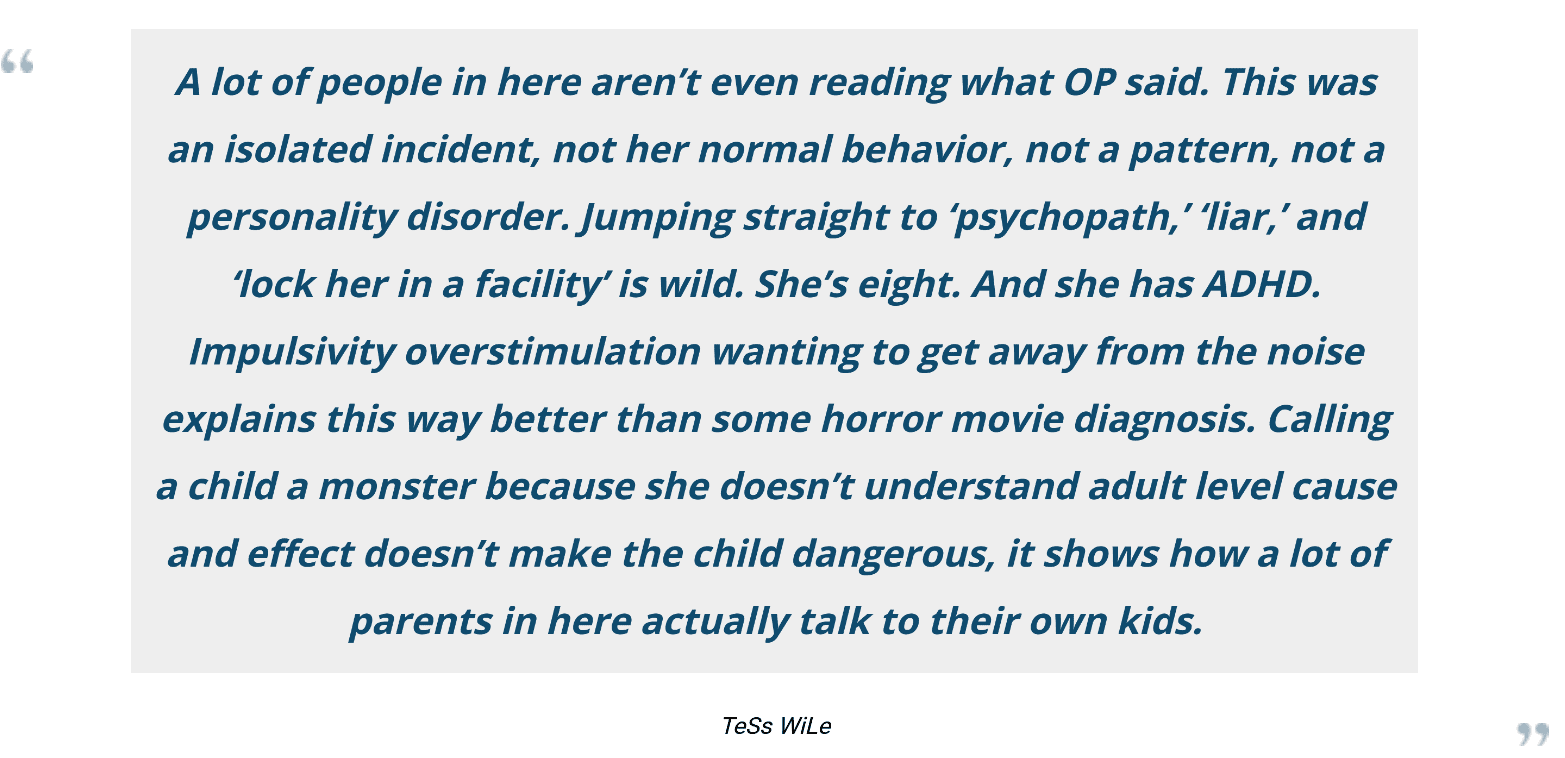
Some parents stated that neurodiverse children- such as those with ADHD or autism- struggle to perceive how their actions affect others. They remain self-absorbed with their own feelings at the moment. TeSs, another commenter, said that calling a child names like “monster” or “broken” won’t do any good. She reminded everyone that this was just one isolated incident, not a whole personality issue. The kid, she said, with this property of ADHD, got overwhelmed and acted without thinking, and adults must teach him without making him feel shame.
Other parents agreed that the child showed no patterns of harmful behavior, suggesting supportive interventions to address the incident and help the child learn impulse control.
Some talked about therapy and evaluating if there were medications for ADHD that might support better behavior. A few parents raised legal concerns, questioning whether the family of the injured child might take legal action. One parent even proposed that the girl should be made aware of profound legal implications by calmly visiting a local police station.
Another point made by someone else was why the playground structure was so high and the ground so hard that a child could break an arm so badly. They suggested mulch or softer ground to avoid such extreme injuries. I remember that our school later installed rubber flooring after multiple incidents in which kids fell on hard ground.
Some parents shared stories from their own childhoods. One recounted how, once as a child, they hurt a friend who was really unintentional, and their parents explained to them the difference between intent and outcome. Other parents of neurodivergent children stated that impulsive acts can wipe memory clean, and sometimes the child does not remember that moment at all.
The whole talk had many perspectives. Yes, this was a serious injury, but many parents said that kids can learn responsibility without being labeled as harmful or dangerous. One parent ended the discussion by saying that children can learn accountability without being labelled ‘broken’. You may also be interested in: Queensbury Board Silences Father Who Tried to Speak About His Daughters Discomfort In Girls Locker Room With A Transgender Student