I’m more inclined towards games that trigger emotions in a player instead of just a rollercoaster of action and noise. I did not expect Keeper to strike me as it did. Not a loud or fast-paced game, Keeper is a slow-paced, quiet, and in-between momentary small happenings that awaken something in you. Double Fine Productions, the makers of Psychonauts and Broken Age, have done something extremely personal here by creating a game that speaks more about themselves and about an idea of being alive without even saying a word.
Story and Setting
Keeper begins with a storm banging against a lonely island. Waves crash, the wind screams, and a little seabird falls beside a very old lighthouse. Inside, something stirs. The gears start grinding, and the lights flicker, and slowly the tower wakes up. This is a strange moment, somewhat sad but at the same time full of hope.
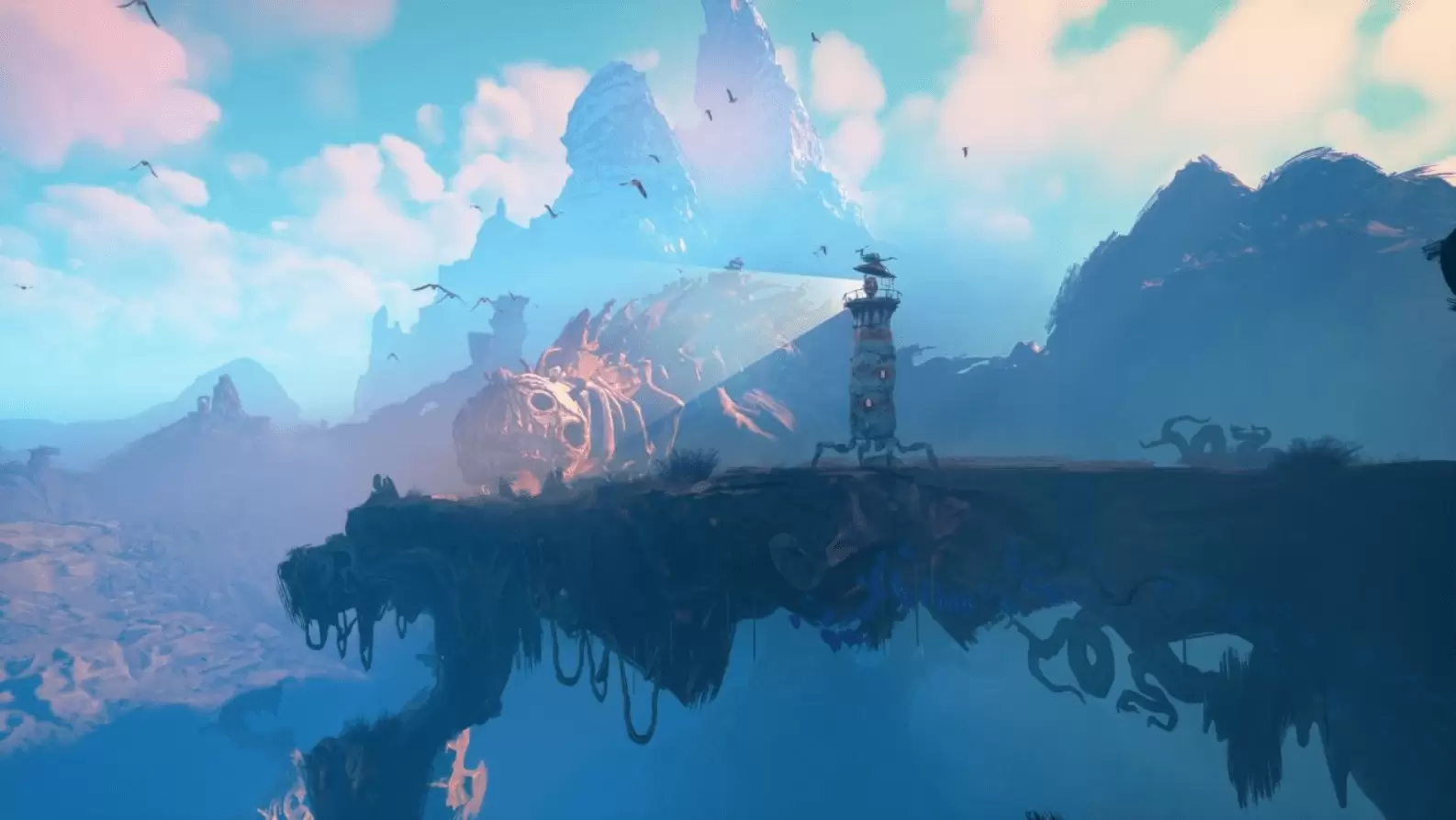
In the first place, I felt pretty much sad and happy when I saw the lighthouse moving on its own. It was no longer just a building but something alive, walking like it was slow, learning how to move. The bird climbs onto it, and the two start traveling together through this dying island. There’s no noise, no dialogue, nothing that tells you what to do. Movement, sound, and light are the only ways to tell the story.
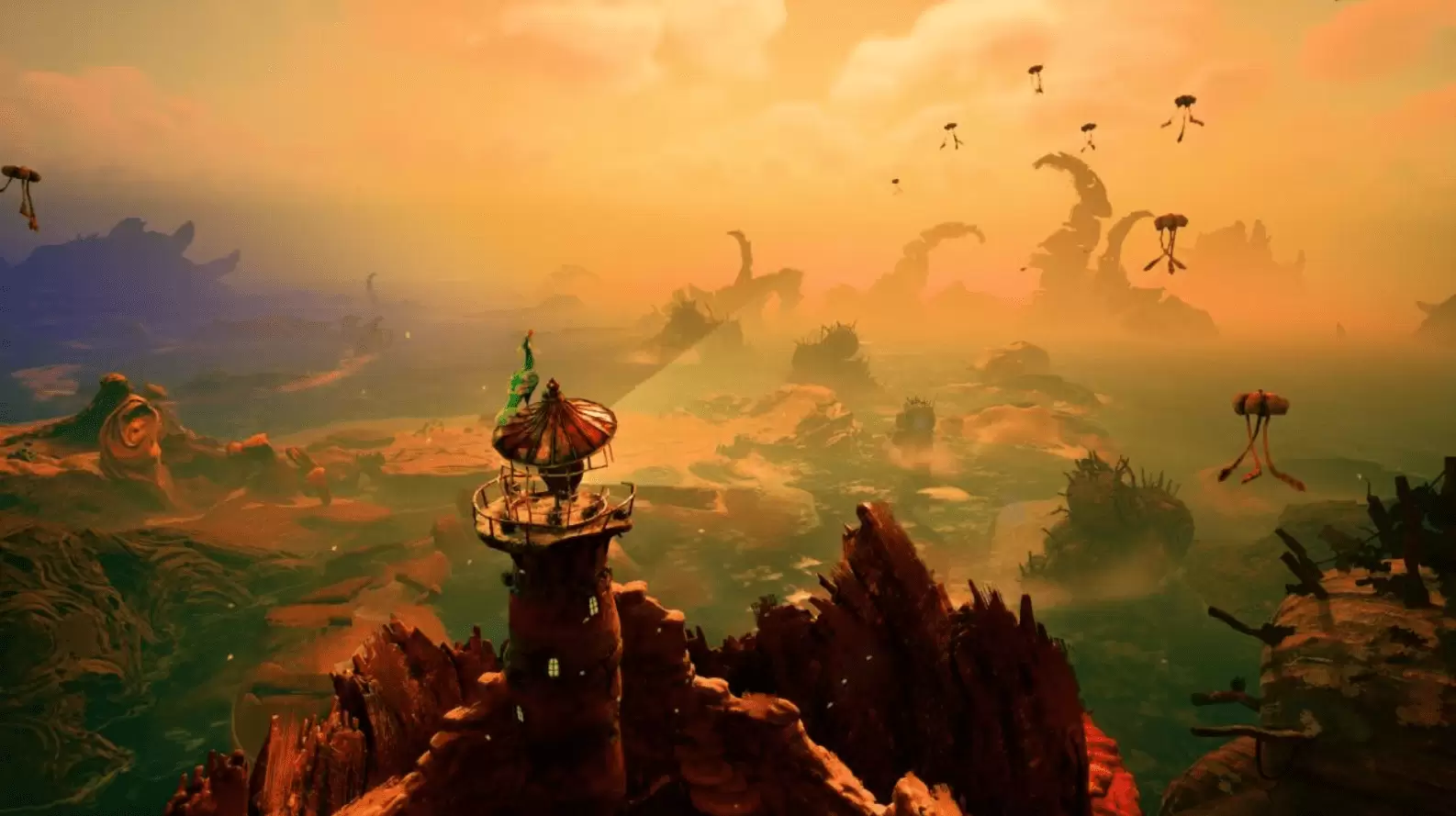
The game feels more like a dream. You are traversing coral wastelands, deserted fishing towns, and glowing forests. All of them have that broken, yet still beautiful, feel. The history behind it has left some wear on the island, like people once lived here but slowly forgot about what kept them alive.
Gameplay And Exploration
Keeper is not your usual adventure game. Sometimes, there are no fights or levels to advance through, and there is no rush. You simply discover, ruminate, and experience. The lighthouse stumbles waddling on stony ground. Initially, I found it really annoying. I fell and stumbled repeatedly, restarting at the beginning. However, then I realized the truth. It was not speed or perfection, but something broken trying to stand again.
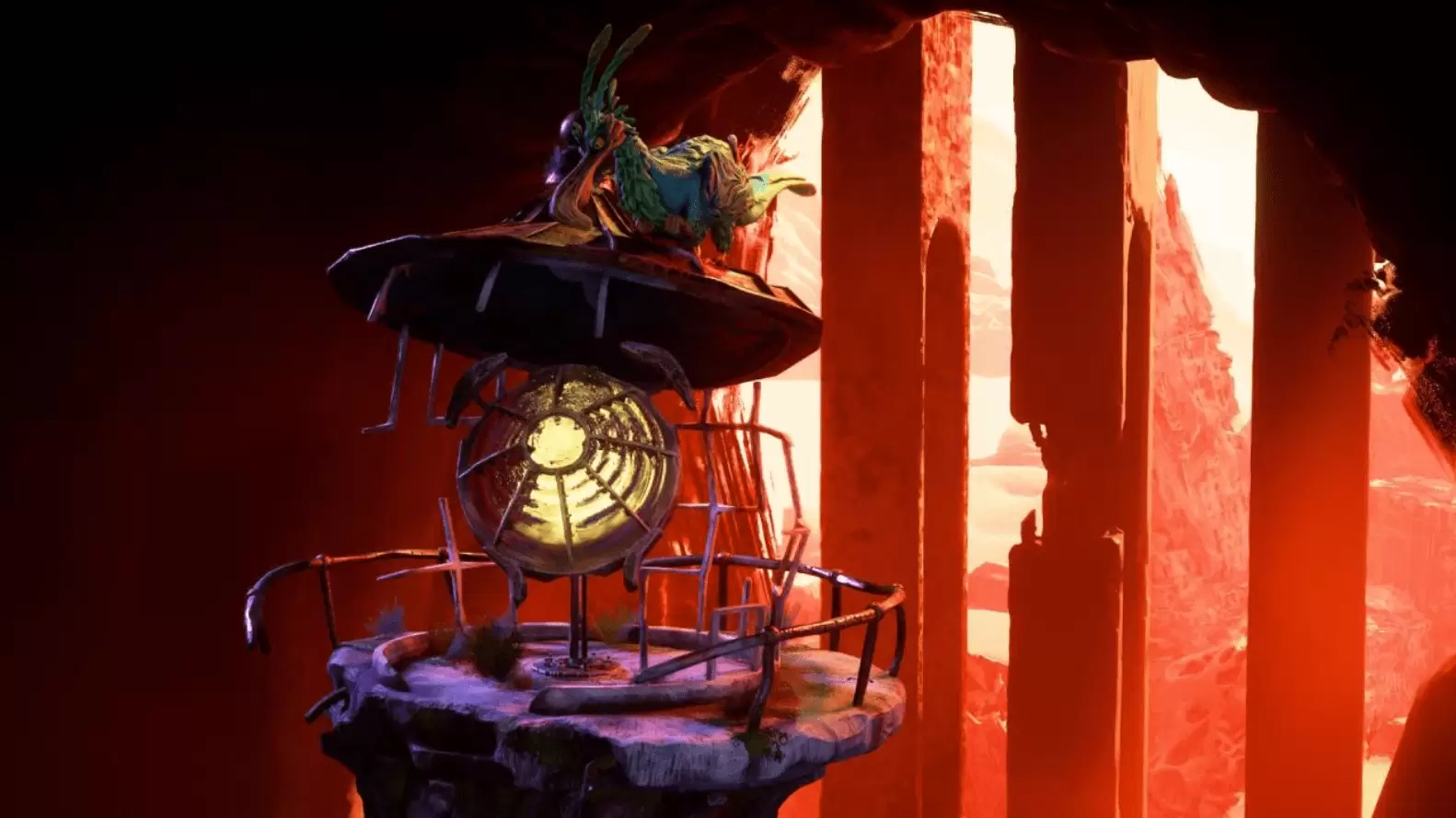
Small puzzles are solved by controlling the beam of light-lighting paths, scaring away shadow, and supporting plant growth. Some puzzles require you to reflect your light using mirrors or prisms. Simple, but feels a little good. The bird is also in a very helpful cooperation. You can send it to hit switches or find hidden objects. Later, it learns new tricks, such as flying through small cracks or revealing hidden paths.
My favorite moment was when the bird and the lighthouse worked together to wake up an old structure. Even the light and birds’ chirps happened to be matched rhythmically, and the ruins started glowing. That honestly gave me goosebumps.
Emotions In Silence
Keeper’s best thing is how it makes you feel without a single word being said. As the bird and the lighthouse slowly bond as you play, sometimes getting ahead, pretending almost to tease you, or sometimes huddling under the beam when it’s raining, the shutter-twitching and pausing in front of certain ruins seems to evoke some painful memories.
There is this subtle sadness that runs through the entire game. Somehow, it gives the impression that the lighthouse has done something that it needs to amend long ago. The light keeps getting dimmer, and you start to worry if it will shine again.
Visuals and Design
On a visual note, Keeper is quite appealing. It is like a painting in every frame. The coral plains twinkle beneath a purple sky while the shipyards covered in seaweed feel very heavy with memory. My favorite location could be the Glass Caves-your light splits into a hundred colors and reflects around you like a living rainbow.
It stands close to a dead machine, yet is also living. Watching it in motion feels extraordinarily human. The animation was so well done that it doesn’t make you remember that it was a machine doing all those stunts.
Sound and Music
The sound design only throws the experience right through the roof. The light hums, legs click, sea echoes, and the magic score from Clara Dalen draws the whole world close to being distant yet peaceful with soft strings and a far-off choir.
There are very long stretches of time when no music at all sounds — just the wind and the waves, and the soft sounds of the birds. Those were the moments that would have me stop and just breathe. I usually don’t do that in games.
Performance and Accessibility
Technically, Keeper works without any hitches. My average computer didn’t suffer from frame drops and maintained 60 FPS. The art style manages to keep it visually acceptable on lower settings, even. There are, of course, a few small hiccups, ranging from sometimes strangely angled cameras to the lighthouse slipping awkwardly on rocks. It isn’t major, though.
What I found impressive was the sincerity put into accessibility. You can edit brightness, blur, and light sensitivity. There was no question of what that meant to Double Fine and “enjoy the game more comfortably” for everyone.
My Experience and Final Thoughts
Of course, this is reminiscent of Journey and Abzû; however, this is more emotional. It may not be a kind of game for everyone since it is so slow and so quiet, yet that is what made it special for me. It got me thinking that even in dark places, a small number of lights can make all the difference.
I will play it with headphones just late at night. There is a section where I would just stand still and watch the light beam moving across the waves. Somehow, it was peaceful and seemed like meditation.
Keeper does not mean winning or losing. Hope, friendship, and trying again, even when falling, make it possible to build meaning when everything seems empty.
Double Fine has made something that feels very much like a story rather than a game. It doesn’t shout; it whispers. And therein lies something quite special, if you stop to listen. You may also be interested in: Silent Hill 2 Remake Breaks Records as Konami’s Biggest Modern Success
Comments