
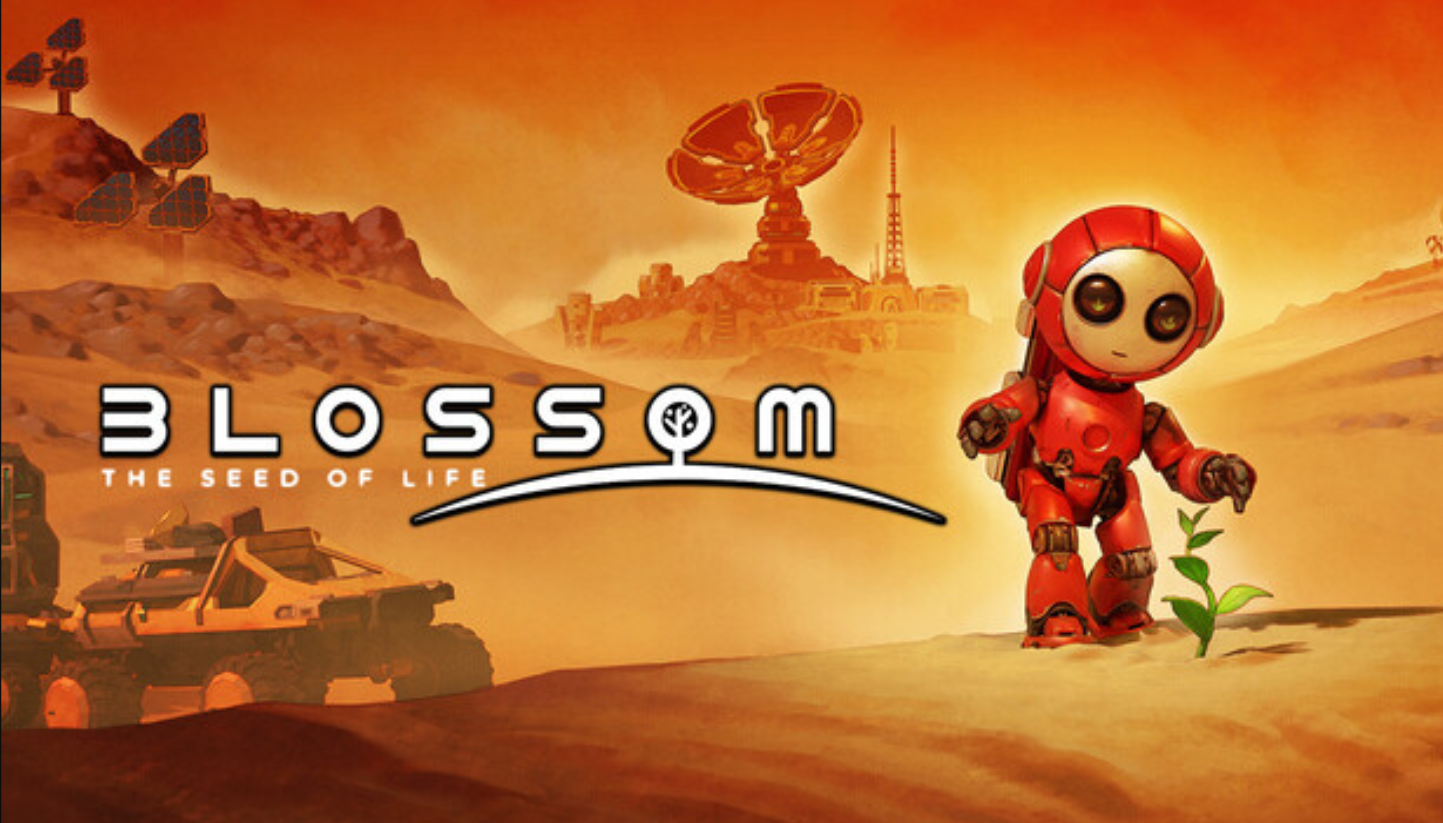
Blossom The Seed of Life Mars Terraforming Survival Game Guide for PC Players
Some games try very hard to guide players through every step. Big arrows appear on the screen. Tutorials pop up again and again. Personally I never enjoyed that too much. The games I liked the most when I was younger were the ones where I had to explore and slowly understand how things worked.
Blossom The Seed of Life feels very similar to those older experiences. It is a calm survival and exploration game where the player slowly turns a dead planet into a living world. The idea sounds simple. But the process takes patience, planning, and curiosity.
The game is created by a solo developer named Thorin, who runs Pebbledust Games. Instead of focusing on fast action or complex combat, the goal here is terraforming a barren planet and watching life slowly appear.
If you enjoy exploration, building systems, and science based gameplay, this game may feel refreshing.
You can also learn more about Mars exploration through the NASA Mars exploration program, which explains many real ideas that inspired games like this.
What Blossom The Seed of Life Game Is About
The main goal in Blossom is to transform Mars from a lifeless desert into a green planet full of water, forests, and animals.
Players control a small robot called Blossom. This machine is designed to survive harsh environments where humans cannot live. Because of this, the gameplay works differently from normal survival games.
Instead of worrying about hunger or thirst, the robot must manage electricity.
Energy becomes the most important resource. Movement, machines, tools, and exploration all require power.
From the start, the planet is dry, cold, and covered in dust. There is no oxygen. No plants. No animals.
Your job is to slowly change that.
The Planet Terraforming Process
The biggest gameplay system in Blossom is terraforming. That means changing a planet’s environment so life can exist.
This happens step by step.
First you increase atmospheric pressure. When pressure rises, ice begins forming. That ice can later melt into water.
Next the temperature must increase. Once the planet warms up, frozen areas slowly turn into liquid water.
After water appears, the next step is soil creation.
Mars dust can be converted into usable soil. Then algae can grow. After that, plants and trees become possible.
Eventually oxygen fills the air and the sky slowly changes color.
Watching this transformation might be one of the most satisfying parts of the game.
I remember playing sandbox building games before where the world changed slowly because of your actions. That feeling of seeing a barren map slowly turn into something alive always felt rewarding.
Creating Life on a Dead Planet
Once the environment becomes stable, life can finally begin.
Players can plant flowers and trees which produce oxygen. As plants spread across the planet, forests begin forming.
Later the player can introduce small creatures. Insects appear first. Birds come later. Animals eventually follow.
Over time the planet develops its own ecosystems.
This progression feels natural because every stage depends on the previous one. Without water there are no plants. Without plants there is no oxygen. Without oxygen animals cannot survive.
The game shows how fragile planetary life systems actually are.
If you want to understand real terraforming concepts you can read about them on NASA science Mars research.
Exploring the Planet Mars
Exploration is another big part of Blossom.
The planet is large and filled with interesting locations.
You can travel in different ways:
- Walking across the surface
- Driving rovers
- Flying through the air
Each method allows you to reach different areas.
Some regions contain useful materials. Others hold mysterious abandoned structures.
During exploration players may discover:
- Old research stations
- Broken machines
- Destroyed spacecraft
- Orbital platforms
These locations slowly reveal the story of what happened before you arrived.
Piecing together the past becomes a small mystery inside the survival gameplay.
Playing as a Robot Changes the Survival System
Most survival games revolve around food and water.
Blossom works differently because the player controls a robot.
Electric power replaces traditional survival needs.
Everything uses energy.
- Movement
- Tools
- Mining
- Machines
- Exploration
If the robot runs out of power, progress stops.
This makes energy management extremely important.
I actually like this idea. It keeps survival mechanics simple but still meaningful.
Instead of constantly gathering food items, players focus on building better energy systems.
Gathering Resources on Mars
Resources are needed for almost everything.
Players collect minerals, dust, ice, and other materials from the planet.
These resources can then be processed into useful items.
Refining materials allows the construction of machines, buildings, and tools.
As the game progresses, technology improves.
New blueprints unlock. Advanced equipment becomes available.
This gradual improvement keeps exploration exciting because new tools open new possibilities.
Automation Using Drones
As the base grows, managing everything manually becomes difficult.
That is where automation comes in.
Drones can help with resource gathering and system maintenance.
These small machines handle repetitive tasks while the player focuses on exploration and expansion.
Automation makes the colony feel more alive and active.
Building Bases on the Planet
Players can construct different types of structures across the planet.
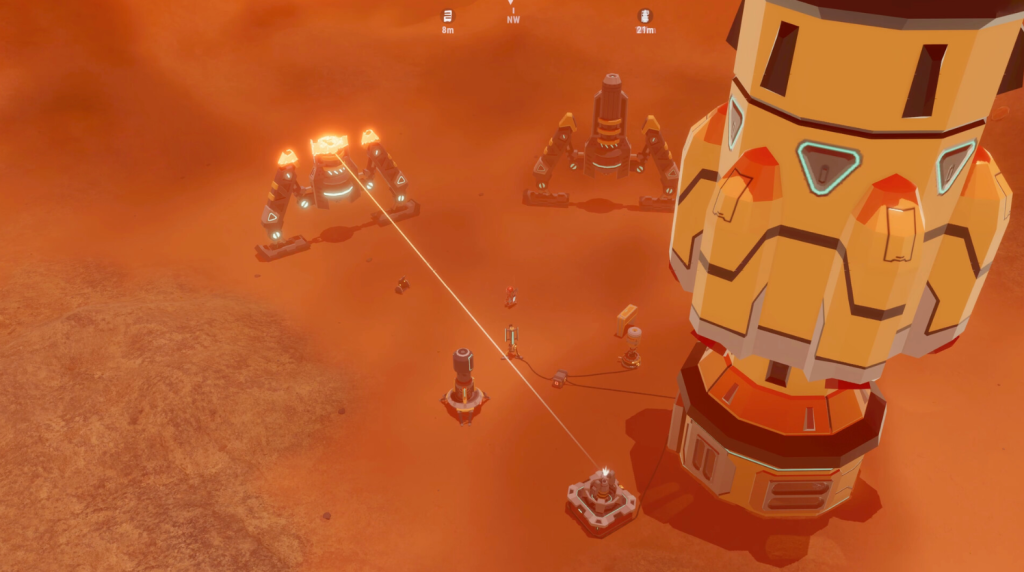
Bases support survival, exploration, and terraforming operations.
Buildings can include:
- Power generators
- Resource processors
- Terraforming machines
- Storage facilities
- Drone control systems
Unlike many survival games, the base system here is flexible.
The player is not locked to one location.
Custom Rovers and Mobile Exploration
One of the more interesting features is the rover building system.
Players can build modular vehicles and attach different parts.
Modules may include:
- Batteries
- Storage containers
- Mining lasers
- Utility equipment
Rovers can also be linked together to form convoys.
This allows players to travel long distances across the planet while collecting resources on the way.
Sometimes exploration games feel slow when moving between locations. Vehicles help solve that problem.
Mobile bases also make the game world feel much larger.
Discovering the Story of the Planet
While exploring Mars, players slowly uncover pieces of history.
Why were there old stations here.
What happened to previous explorers.
Why is the planet empty.
The game does not explain everything immediately. Instead, players discover the story through exploration.
This style of storytelling feels natural and encourages curiosity.

Blossom The Seed of Life System Requirements
Another good thing about the game is that it does not require a powerful computer.
Even basic gaming systems should run it without problems.
Minimum Requirements
- Operating System Windows 10 64 bit
- Processor X64 dual core CPU 2 GHz or higher
- Memory 4 GB RAM
- Graphics 2 GB VRAM
- DirectX Version 11
- Storage 3 GB free space
- Sound card Any
Recommended Requirements
- Operating System Windows 11 64 bit
- Processor X64 dual core CPU 3 GHz or higher
- Memory 8 GB RAM
- Graphics 4 GB VRAM
- DirectX Version 11
- Storage 4 GB free space
- Sound card Any
Why Exploration Game Fans May Enjoy Blossom
Blossom offers something different from many survival games.
The focus is not combat. It is growth and discovery.
Some reasons players might enjoy it include:
- Relaxing exploration gameplay
- Planet terraforming mechanics
- Robot based survival system
- Resource gathering and automation
- Vehicle building and mobile bases
- Slow world transformation
Watching an empty planet slowly turn green can be surprisingly satisfying.
My Personal Thoughts About the Game
Games that allow players to shape an entire world always catch my attention.
Blossom seems to follow a calm and thoughtful approach.
Instead of rushing players through missions, it encourages exploration and experimentation.
I like the idea of slowly bringing life to a silent planet. It reminds me of old sandbox games where the fun came from curiosity rather than constant action.
If the terraforming system works well, this game could become a relaxing experience that players return to again and again.
Frequently Asked Questions About Blossom The Seed of Life
What type of game is Blossom The Seed of Life
Blossom The Seed of Life is a survival exploration and terraforming game where players transform the planet Mars into a living ecosystem.
Who developed Blossom The Seed of Life
The game is created by a solo developer named Thorin who runs the studio Pebbledust Games.
What is the main goal of the game
The main goal is to terraform Mars by increasing atmospheric pressure, creating water, growing plants, and eventually supporting animal life.
Who is the main character in Blossom
The player controls a robot called Blossom that can survive extreme conditions on the planet.
How does survival work in the game
Instead of food or water, the robot relies on electricity. Managing energy is necessary for movement, tools, and machines.
Can players explore the whole planet
Yes. Players can explore Mars on foot, by rover vehicles, and through aerial travel to reach distant areas.
Does the game include base building
Yes. Players can build structures, machines, and automation systems to support terraforming and exploration.
What vehicles are available in the game
The game allows players to build modular rovers with different attachments such as batteries, storage modules, and mining tools.
What are the system requirements for Blossom The Seed of Life
The minimum requirements include Windows 10, a dual core processor, 4 GB RAM, 2 GB VRAM graphics, and around 3 GB of storage space.