Assassin’s Creed Black Flag Resynced Review: Why Edward Kenway’s Voyage Still Feels Worth Taking

Why I Still Think About the Original Before Playing This One
I bought Assassin’s Creed IV: Black Flag on a whim back in 2013 because I wanted a change from the usual hooded assassin routine, and I ended up putting close to eighty hours into it before I even touched the main story missions properly. That game did something strange to a lot of players my age. It made piracy feel less like a gimmick bolted onto an existing formula and more like the actual point of the series for a while. So when Ubisoft confirmed the Black Flag remake, my first reaction was not excitement. It was worry. Remaking a game that people already love is a much harder job than building something new, because you are not just competing with modern releases, you are competing with someone’s memory of a summer they spent sailing around a pixelated Caribbean.
Assassin’s Creed Black Flag Resynced launched on July 9, 2026 for PlayStation 5, Xbox Series X|S and PC, and I have now spent a solid stretch of time with it across two platforms to see whether it earns its place next to the original rather than just riding on its name. This review covers the story changes, the combat rework, naval battles, exploration, performance, pricing, and near the bottom you will also find a full controller and keyboard layout guide for both PC and Xbox, because that was the one thing I could not find written out clearly anywhere before I started playing.
What made the original special was timing as much as design. Black Flag arrived when the Assassin’s Creed series was starting to feel a little repetitive, and by turning down the volume on hidden blades and turning up the volume on cannons and open ocean, Ubisoft Montreal accidentally made one of the better pirate simulators of that entire console generation. Games like Sea of Thieves and Skull and Bones came later and each carved out their own space, but neither fully replaced the specific feeling Black Flag offered, which was captaining your own ship while also being able to step off it and personally storm a fort on foot. That dual identity is still the entire appeal of Resynced thirteen years later, and thankfully it is the part Ubisoft Singapore protected the most carefully during development.
I also think it is worth mentioning who actually built this remake, because it adds a layer of context that changes how I read some of the decisions made here. Ubisoft Singapore led development, drawing on staff who spent years working on Skull and Bones, a separate pirate focused game built in the same shared universe. Watching a team that spent nearly a decade in the shadow of Black Flag get the chance to rebuild the game that inspired their own project in the first place gives Resynced a sense of care that a rushed cash grab remake usually lacks. You can feel that care in small touches throughout the game, from the way rope and rigging animate correctly under wind pressure to the way individual crew members react differently during a boarding action depending on their assigned role.
What Assassin’s Creed Black Flag Resynced Actually Is
Let’s clear up the confusion first, because a lot of people online keep calling this a remaster. It is not. Ubisoft has been fairly clear that Black Flag Resynced was rebuilt from the ground up on the current version of the Anvil engine, the same engine technology that powered Assassin’s Creed Shadows. None of the original 2013 code carried over. That distinction matters because it explains why the game looks and feels the way it does. A remaster usually means better resolution and a few texture upgrades on top of an old skeleton. A remake means new animations, new lighting systems, reworked combat logic, and in this case, new story content written specifically for the 2026 version, including two brand new scenes penned by Darby McDevitt, who wrote the original game’s script.
You are still playing as Edward Kenway, a Welsh privateer turned pirate captain who stumbles into a centuries old war between Assassins and Templars almost by accident. The bones of the story have not changed. What has changed is how much room the game gives that story to breathe, and how much of the modern day framing device has been trimmed away.

Edward Kenway Is Still One of the Series’ Best Leads
Edward works as a protagonist because he is not trying to save the world when the game begins. He wants money, status, and a way to prove himself back home in Bristol. That selfishness is what makes his slow transformation land emotionally instead of feeling forced. Resynced leans into this even harder than the original did. New conversations with his crew, expanded scenes with people close to him, and reworked facial performances all push toward the same goal, making Edward’s greed feel human rather than cartoonish before it eventually costs him.
The new footage used modern motion capture to redo Kenway’s facial animation, and it shows most clearly in quiet scenes rather than big battles. A raised eyebrow during a tense negotiation, a tired look after a long voyage, small things like that carry more weight than they did in 2013. Matt Ryan, who voiced Edward originally, returned for new lines, and the chemistry between his delivery and the new animation work is genuinely one of the strongest upgrades in the whole package.
Supporting characters benefit too. Blackbeard gets a more developed arc this time around, with new content dedicated specifically to fleshing out his relationship with Edward beyond the handful of scenes the original gave him. Stede Bonnet, a character who barely registered in 2013, actually gets a reason to exist in the story now. None of this rewrites Black Flag’s plot in a dramatic way, but it fills in gaps that longtime fans have complained about for over a decade.
The New Scenes Do Not Always Land the Same Way
I want to be honest here rather than just praise everything, because that would not be a fair review. A handful of the newly written scenes feel slightly stiffer than the original dialogue. The 2013 script had this loose, almost improvised energy to conversations between pirates, full of banter that did not always serve the plot but made the crew feel alive. Some of the added dialogue in Resynced is more focused on moving the story forward efficiently, which occasionally strips out that rough charm. It is a minor complaint in the grand scheme of an eighty plus hour adventure, but if you loved the original specifically for its writing texture, you will notice the difference in a few spots.
The Modern Day Sections Have Been Almost Entirely Removed
This is probably the single most divisive decision in the entire remake. The original Black Flag split time between Edward’s Caribbean adventure and a present day framing story involving Abstergo Entertainment. Resynced strips nearly all of that away and keeps the focus locked on Edward’s journey from start to finish.
If you are someone who only ever cared about the pirate half of the game, this is going to feel like a relief. The pacing benefits enormously from not having to cut away every few hours. But if you were invested in the wider Assassin’s Creed mythology and the way Black Flag connected to Desmond Miles and the larger present day storyline, you are going to feel like something meaningful got left on the cutting room floor. There is no perfect answer here. Ubisoft made a choice, and it is one that clearly favors new players and pure pirate fantasy fans over series loyalists who track the overarching lore.
Traversal and Parkour Feel Noticeably Smoother
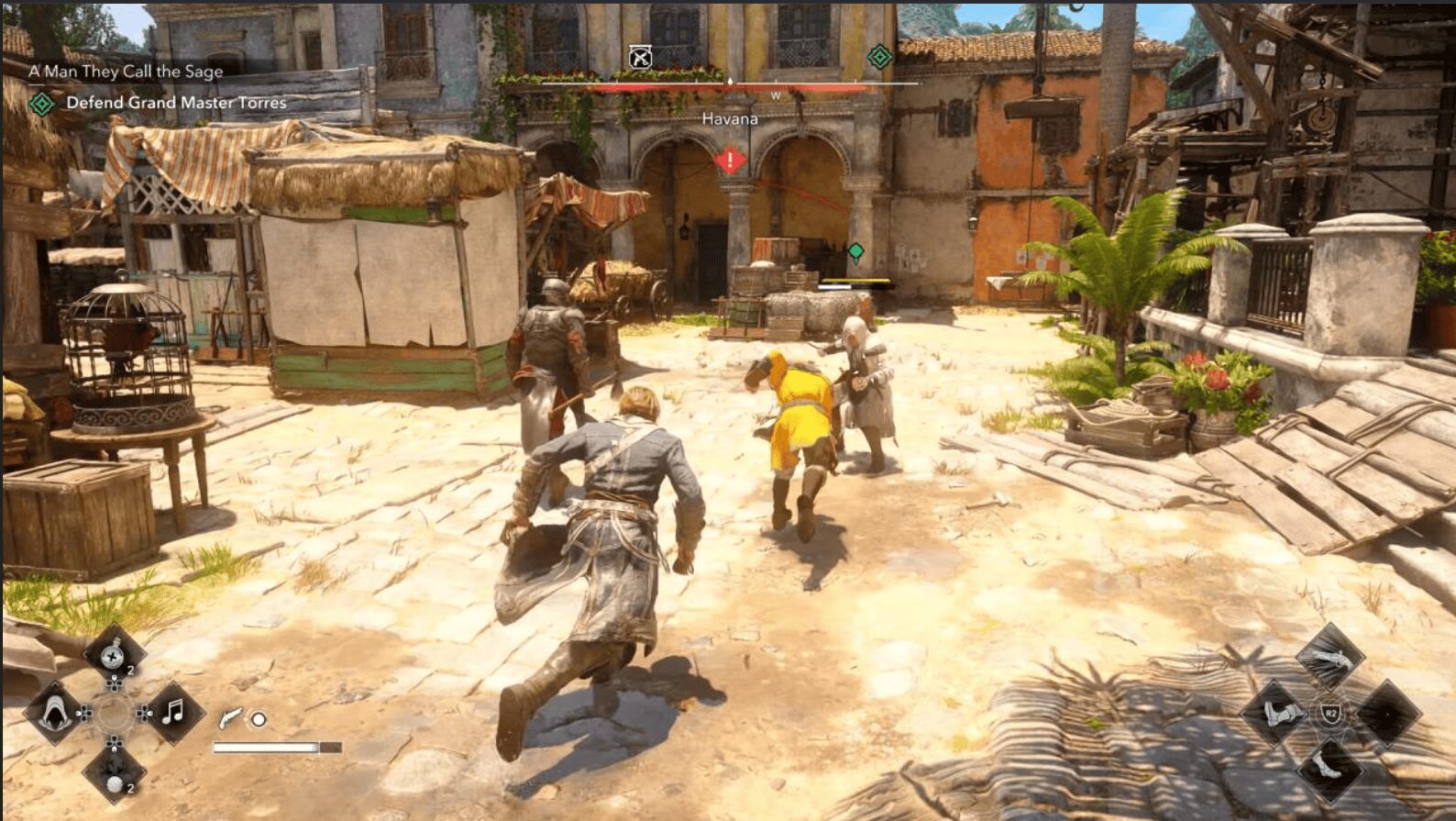
Climbing in the original Black Flag had a certain stiffness to it that you stopped noticing after a while simply because every Assassin’s Creed game from that era moved the same way. Going back to Resynced after playing something like Assassin’s Creed Shadows makes the difference obvious immediately. Landing animations recover faster. Vaults connect into runs without the small pause that used to break your rhythm. Climbing up the side of a fort in Havana or scrambling across rooftops in Nassau feels closer to how modern entries move, without losing Edward’s slightly heavier, more physical way of climbing compared to someone like Basim or Naoe.
It is still not the most technical parkour system Ubisoft has ever built. There is no dedicated free running button layered with complex chaining like you see in some newer titles. But for a pirate adventure that spends most of its time on ships and beaches rather than dense cities, the traversal upgrade fits the tone perfectly.
Stealth Finally Gets a Proper Crouch Button
This sounds like a small thing until you actually play it. The original Black Flag had extremely limited stealth options outside of tall grass zones and a handful of scripted hiding spots. Resynced adds a dedicated crouch, which sounds minor on paper but genuinely changes how you approach guarded forts and enemy camps. Darkness and weather now factor into detection more meaningfully as well, so a stormy night raid on a Spanish outpost plays out differently than the same raid at noon.
Enemy awareness is not perfect. I had a handful of moments where an assassination from thirty feet away instantly alerted an entire camp, followed a few minutes later by guards standing next to an unconscious body without noticing a thing. These inconsistencies do not ruin the experience, but they are the kind of rough edge you would expect a big budget remake in 2026 to have ironed out by now.
Mission Design Gets Quieter but Smarter Improvements
One of the more overlooked upgrades in Resynced is how the game handles failure. In the original release, botching a stealth mission often meant restarting the entire sequence from the beginning, which could mean losing ten or fifteen minutes of progress over a single spotted guard. Resynced frequently lets a failed stealth attempt fold naturally into open combat instead of forcing a hard reset, so a mistake becomes a new problem to solve rather than a punishment that sends you back to a loading screen. Not every mission received this treatment, and a handful of older, more rigid escort and tailing sequences still feel a bit dated compared to the rest of the package, but the overall pacing benefits enormously from fewer forced restarts.
Side contracts also got a quiet but meaningful pass. Assassination contracts, delivery routes, and naval escort jobs used to feel fairly interchangeable in the original, but Resynced adds small narrative dressing to many of them, brief dialogue exchanges, unique enemy behavior, or a twist on the objective, that make repeating the same mission type feel less repetitive over a long playthrough.
Combat Has Been Rebuilt Around Parries, Not Waiting
The original game’s combat was famously passive. You waited for an enemy to swing, countered, repeated. It looked flashy but demanded very little from the player. Resynced changes that formula significantly. Timing now matters. Heavy soldiers need patience and proper spacing. Fast enemies punish button mashing. Ranged units force you to actually manage your position instead of standing still and countering forever.
New tools expand your options too. Rope dart takedowns, sleep darts, berserk darts, smoke bombs, environmental kills using breakable scenery, all of it gives combat more texture than the original had. Chain kills return and still feel satisfying when you string together four or five enemies in a row without breaking flow.
Where combat falls a little short is long term variety. Once you learn the patterns for each enemy archetype, the game rarely forces you to adapt again. Difficulty later on comes mostly from throwing more enemies at you rather than smarter ones. It is a real improvement over 2013, but it stops short of matching combat systems in Ubisoft’s more RPG leaning recent entries.
I noticed the biggest jump in quality during forced engagement missions, the ones where hiding is not an option and you have to fight your way through a garrison. The original handled these moments awkwardly, since the passive counter loop made large groups feel more like a rhythm exercise than a real fight. In Resynced, positioning around exploding barrels, using narrow doorways to limit how many enemies can reach you at once, and mixing pistols with melee to thin out a group before they close the distance all matter in a way they simply did not before. It is not a soulslike by any measure, but it borrows just enough modern combat sensibility to feel current without losing Edward’s swaggering, slightly theatrical fighting style.
Naval Combat and the Jackdaw Remain the Heart of the Game
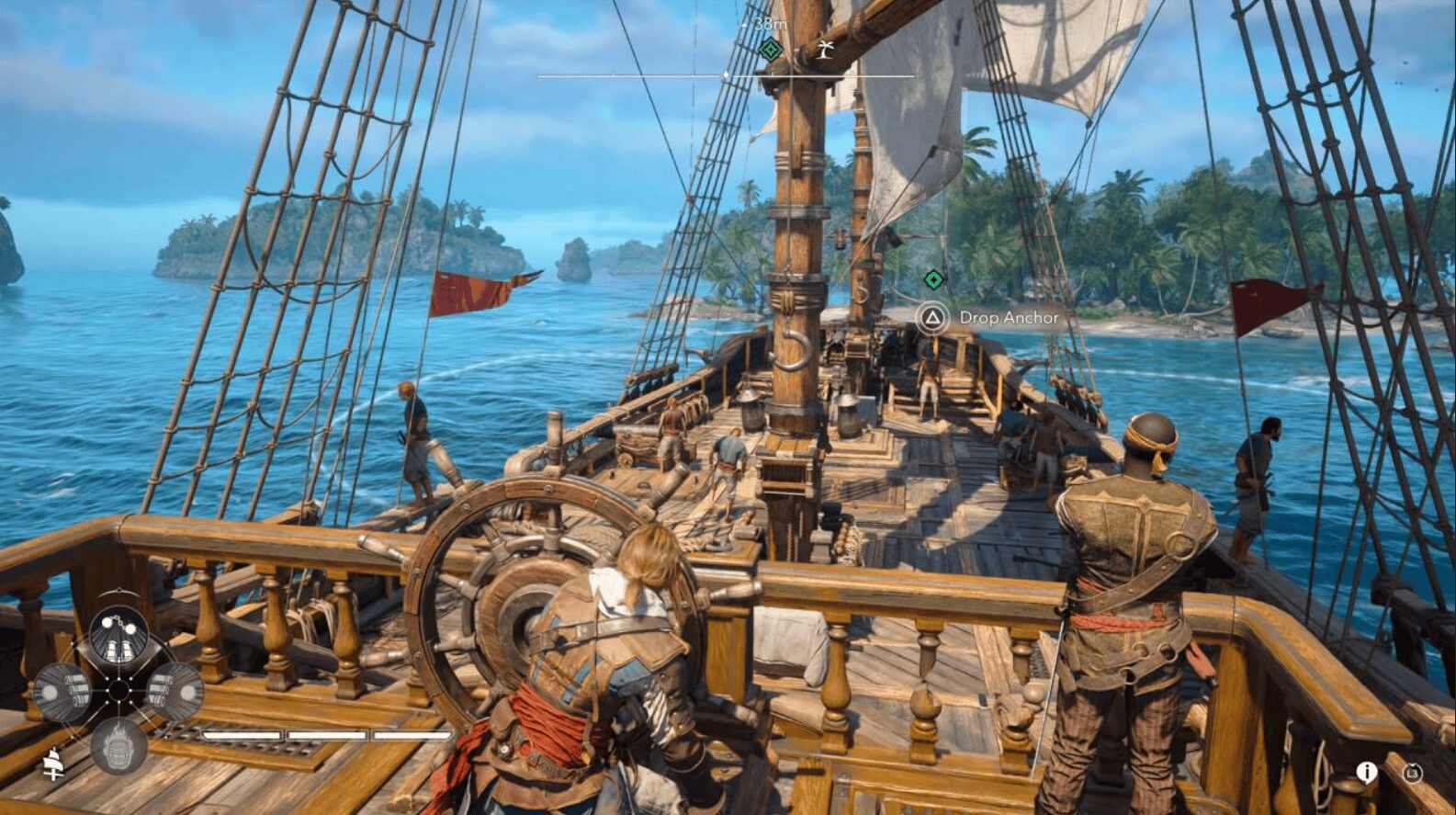
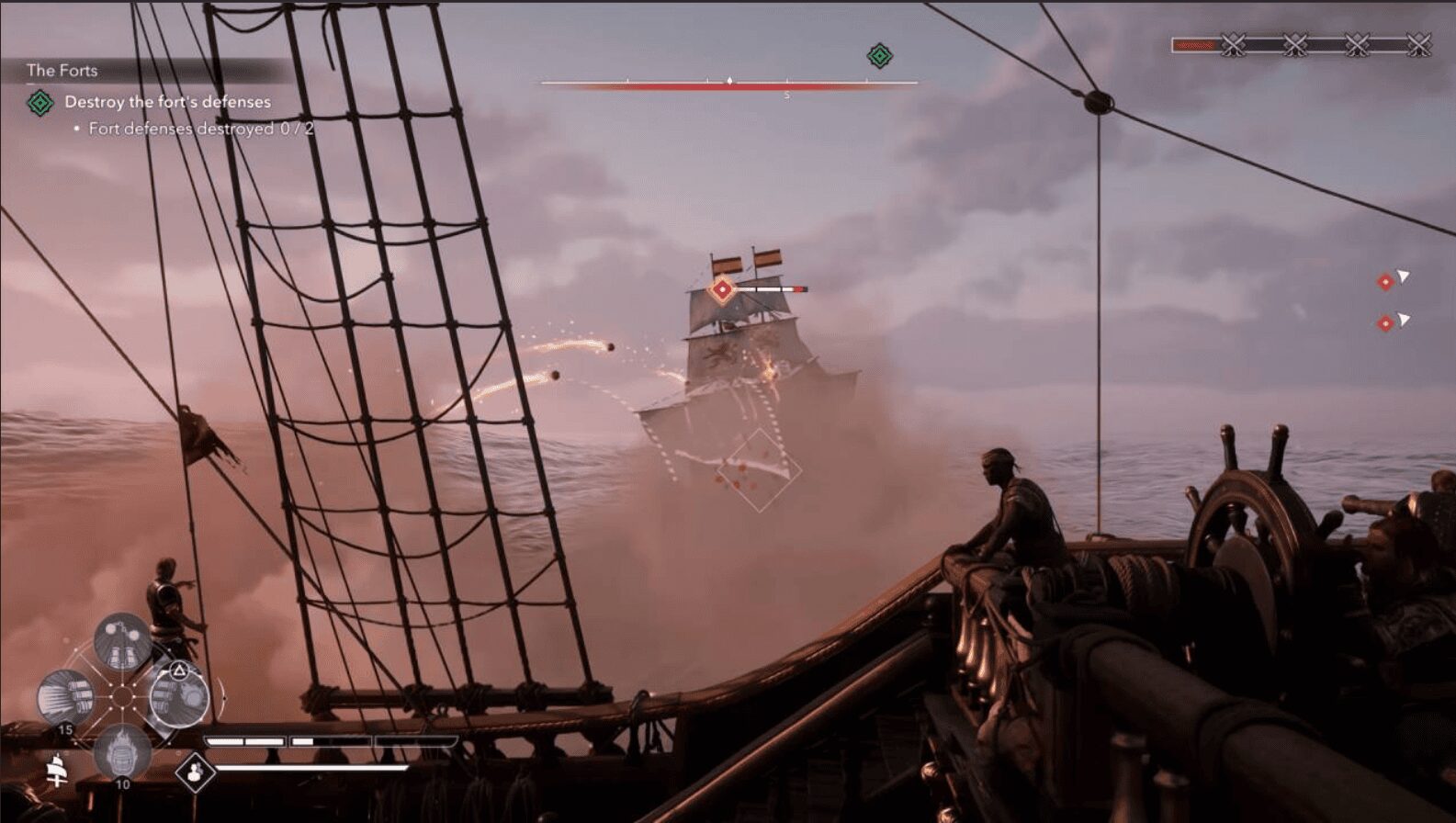
If there is one part of Black Flag Resynced that fully justifies the remake on its own, it is sailing. Broadside cannons, swivel guns, mortars, chain shot, boarding actions, all the classic tools are back and feel more responsive than ever. New officer skills add a layer of tactical decision making to bigger naval battles, letting you specialize the Jackdaw’s crew toward boarding, ranged bombardment, or defensive maneuvering depending on your playstyle.
Upgrading the Jackdaw remains one of the most rewarding progression loops in the game. Every reinforced hull plate, every new cannon type, every improved sail configuration has a direct and noticeable effect the next time you sail into a fight. Early naval encounters that felt genuinely threatening in the opening hours become manageable, then eventually trivial, as your ship grows into one of the most feared vessels in the Caribbean. That sense of earned power is something a lot of open world games chase and rarely nail this well.
Loading screens between sailing and exploration have also been dramatically reduced, which sounds like a small technical note but changes how the whole world feels. Spotting a distant island, adjusting your sails, and arriving there without an interruption keeps the sense of discovery intact in a way the 2013 version, limited by seventh generation hardware, simply could not manage.
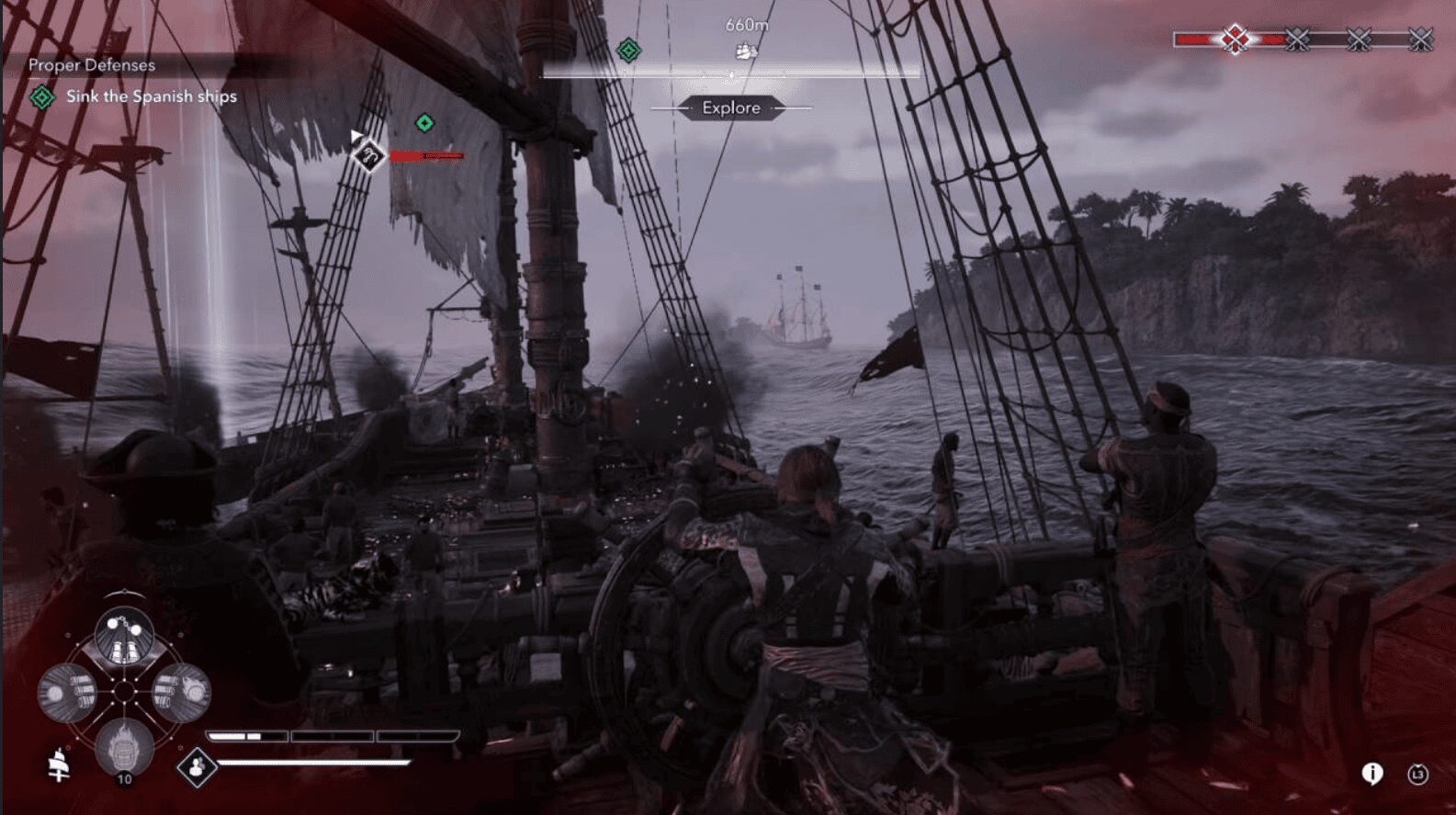
Weather now plays a much larger tactical role during naval battles than it used to. Sailing into a storm to escape a fleet that outguns you is a legitimate strategy again, since heavy rain and rough seas reduce visibility for both sides and make broadside accuracy less reliable. I used this trick more than once against a group of Spanish man o wars that would have otherwise sunk the Jackdaw in a straight fight, cutting hard into a squall and letting the chaos cover my escape before circling back once the odds were better. Wind direction also affects sail speed now in a way that rewards paying attention to your heading rather than just holding forward and firing, which longtime sailing game fans will likely appreciate more than casual players who just want to point and shoot.
Visuals, Environment Detail, and Audio
Resynced uses ray traced lighting with global illumination, physically based rendering, and a fully rebuilt water simulation system. In practice this means storms actually feel dangerous, sunlight scattering across open water during a calm afternoon sail is genuinely beautiful, and port cities like Havana and Nassau are dense with background activity that makes them feel lived in rather than decorative.
The audio side deserves just as much credit. Sea shanties return, now with new additions, and the orchestral score shifts naturally between quiet character moments and full scale naval battles. Ambient sound design, from creaking wood to distant thunder to busy market chatter in port towns, does a lot of quiet work in making the Caribbean feel like a real place rather than a backdrop for missions.
Playing with a good headset or a Dolby Atmos setup genuinely changes how naval battles land, since cannon fire now has real directional weight and you can hear an enemy ship closing in from behind before you ever see it on screen. I switched between a soundbar and headphones during testing, and the headphone experience made close quarters boarding fights noticeably more tense, since footsteps on deck, shouted orders from crew, and the creak of timber under strain all layer together in a way that a single speaker setup simply flattens out.
Performance and Technical Issues
Performance is generally solid on current generation consoles, with a 60 frames per second option available, and PC players get access to modern upscaling and frame generation tools along with software ray tracing options for machines without dedicated ray tracing hardware. That said, early reviews and player feedback around launch flagged occasional frame pacing issues during cutscenes on some configurations, along with the usual crop of animation glitches and minor AI oddities you tend to see in any big open world release at launch. None of what I encountered was game breaking, but a patch or two down the line would not hurt.
Who This Game Is Actually For
Not every remake needs to convince every kind of player, and being honest about that upfront saves people money. If you are someone who wants a slower, methodical, heavily story driven RPG experience closer to Odyssey or Valhalla, Resynced is going to feel comparatively lean, since there is no sprawling skill tree or gear score chase to sink hundreds of hours into. If instead you want a focused, emotionally grounded pirate adventure with strong naval combat, likable characters, and a manageable scope that respects your time, this is close to an ideal fit.
Newcomers to the franchise looking for a starting point should feel comfortable jumping straight in, since the story requires no prior knowledge of the wider Assassin’s Creed universe now that the modern day framing has been reduced. Series veterans chasing the overarching lore about the Assassins, Templars, and ancient precursor civilizations will get far less of that connective tissue here than in past entries, and that absence is worth knowing about before you buy.
Players sensitive to combat difficulty spikes should also know the reworked parry system takes an hour or two to click, especially if your muscle memory is still tuned to the original’s slower, more forgiving counter timing. Give it time before deciding it is too demanding, since the difficulty settings mentioned earlier can soften that curve considerably if needed.
Pricing and Whether It Is Worth Buying
Assassin’s Creed Black Flag Resynced launched at a premium price point in line with a full remake rather than a discounted remaster. Whether that price feels justified depends heavily on your relationship with the original. If you never played Black Flag, this is genuinely one of the best entry points into Ubisoft’s open world pirate fantasy available right now, built with modern systems and none of the dated jank. If you already sank eighty hours into the 2013 version and remember it fondly, the expanded story content, reworked combat, and dramatically improved sailing experience give you real reasons to go back, even if a few of the new scenes do not quite match the original’s writing.
Side Content, Exploration, and the Small Details That Add Up
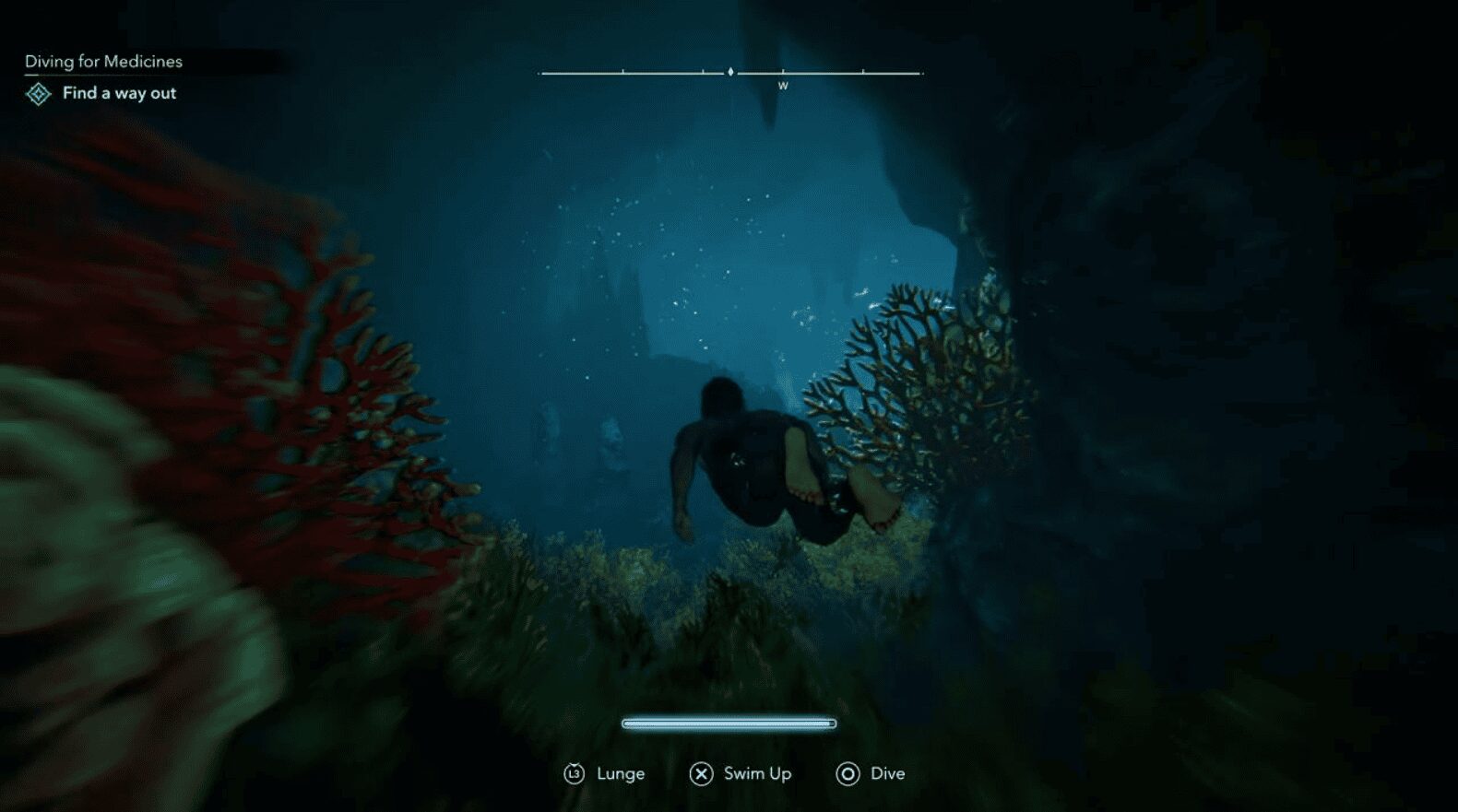
A pirate game lives or dies on how good it feels to just wander, and this is where Resynced quietly does some of its best work. The Caribbean is scattered with hidden caves, sunken shipwrecks, forgotten forts, remote islands, and abandoned plantations, and almost none of it feels like padding added purely to inflate a map with icons. Diving down to a wreck to recover a chest usually rewards you with something tangible, whether that is a rare crafting material, a blueprint for new gear, or a fragment of extra story content tied to Edward’s crew.
Legendary ship hunts return as one of the tougher optional challenges in the game, and they have been tuned to actually test the naval upgrades you have earned rather than just throwing a bigger health bar at you. I lost my first attempt against one of these ships twice before realizing I needed to prioritize mortar upgrades over raw cannon damage, which is exactly the kind of trial and adjustment that makes naval progression satisfying instead of just numeric.
Treasure maps, a returning fan favorite mechanic, are back and slightly reworked so the clues feel less vague than some players remember from the original. Underwater exploration benefits enormously from the new water rendering, since visibility, light shafts, and marine life all look far more convincing than the murky, low detail underwater sections from 2013.
New Features Worth Knowing About
A handful of additions did not exist in the original game at all. Ship pets are one of the more unexpected new features, small companions that ride along on the Jackdaw and offer minor gameplay perks depending on which one you choose. New sea shanties have been added on top of the returning classics, which matters more than it sounds like it should once you have spent forty hours listening to your crew sing during long voyages.
A dedicated photo mode has also been included, letting you pause during a storm, a sunset, or a naval battle to capture the moment with adjustable depth of field, filters, and framing tools. Given how much work went into the lighting and weather systems, this feels less like an afterthought and more like Ubisoft wanted players to actually stop and appreciate the environment work.
The HUD is fully customizable through several presets. A default setting shows enemy health and defense bars so newcomers understand the reworked combat mechanics right away. A Minimal preset strips things down to just health and interaction prompts for players who prefer a cleaner screen, and a Simple preset sits in between, offering light navigation and combat assistance without cluttering the view. Turning off combat visual feedback entirely changes how fights feel, since you start reading enemy animations directly instead of relying on prompts, which longtime action game fans will likely appreciate.
How Black Flag Resynced Compares to Other Assassin’s Creed Games
If you have played recent entries like Assassin’s Creed Valhalla, Odyssey, or Shadows, Resynced is going to feel like a deliberate step away from RPG style leveling and gear score chasing. There is no experience point grind gatekeeping story progress here. Upgrades come from direct actions, better swords, stronger ships, improved outfits, rather than an abstract number climbing in the background. Ubisoft has been fairly open that this was an intentional choice, positioning Resynced closer to a pure action adventure experience in the spirit of the earlier Ezio era games rather than the sprawling RPG format the series shifted toward after Origins.
Compared to Assassin’s Creed Mirage, which also aimed for a smaller scale, more classic feeling entry, Resynced is a much bigger undertaking simply because of how much time it expects you to spend at sea. Compared to Assassin’s Creed Shadows, the parkour and combat animation improvements share a clear family resemblance, since both games were built on the same current generation Anvil engine foundation, but Resynced keeps its tone lighter and more adventurous rather than leaning into the heavier, more methodical pacing Shadows was known for.
For anyone building out a personal ranking of pirate games or Assassin’s Creed entries, Resynced sits comfortably near the top of both lists, not because it reinvents anything, but because it refines a formula that was already one of the strongest the franchise has produced.
Standard Edition Versus Deluxe Edition
The standard edition includes the full base game with all main story content and the reworked systems described throughout this review. The Deluxe Edition adds the Blackbeard’s Crimson Pack, a cosmetic and resource bundle, along with a small in game Resource Pack that lets you jump start early Jackdaw upgrades using extra materials and trade goods. Neither edition includes early access, so the only real question is whether the cosmetic pack and minor head start on ship upgrades are worth the price difference for you personally. For most players, the standard edition covers everything that actually matters for the story and core experience.
PC System Requirements Overview
Black Flag Resynced supports a wide range of hardware thanks to scalable graphics presets and both hardware accelerated and software based ray tracing options, which matters for players on older GPUs that lack dedicated ray tracing cores. At the low end, running the game at 1080p and thirty frames per second on a low preset with standard ray tracing and a balanced upscaler generally requires a processor around the level of an Intel Core i7 8700K or AMD Ryzen 5 3600, paired with a mid range graphics card from the last several years. Storage requirements sit around 65 GB, so it is worth clearing space well ahead of installing, and preloading before launch day saves you from sitting through a lengthy download once the servers actually open.
Tips for Getting Started
A few things I picked up during my playthrough that would have saved me time early on. Prioritize upgrading the Jackdaw’s hull and cannons before chasing cosmetic ship customization, since early naval encounters get noticeably easier once your ship can actually take a hit. Do not ignore side contracts in the opening hours even if they seem repetitive, since several of them unlock crew recruitment options that make longer voyages more efficient. If stealth interests you, invest in the crouch and cover mechanics early rather than falling back into old habits from the original game, since the new detection systems genuinely reward patience. And if naval combat starts feeling too easy by the midgame, seek out a legendary ship hunt, since those fights are specifically tuned to challenge a fully upgraded Jackdaw rather than a beginner one.
Full Controller Layout Guide for Xbox and PC
This is the section I wish existed before I started playing, so here it is in full. Layouts below reflect the default control scheme. Both platforms allow full remapping through the settings menu if any of these do not suit your hand.
Xbox Series X|S Controller Layout, Exploration and Traversal
- Left Stick: Move Edward
- Right Stick: Camera control
- A: Jump, climb, free run up
- B: Cancel, roll, free run down when combined with movement
- X: Interact, loot, pick up items
- Y: Use Eagle Vision style detection
- Left Bumper (LB): Whistle, call crew or nearby animals depending on context
- Right Bumper (RB): Sprint when held while moving
- Left Trigger (LT): Aim ranged weapon
- Right Trigger (RT): Fire ranged weapon or context action while aiming
- Left Stick Click: Crouch, toggle stealth movement
- Right Stick Click: Reset camera behind Edward
- D-Pad Up: Quick access to consumables wheel
- D-Pad Down: Change equipped ranged weapon
- D-Pad Left and Right: Cycle through gadgets, darts, and bombs
- View Button: Open map
- Menu Button: Pause and open main menu
Xbox Controller Layout, Combat
- X: Light attack with sword or dual weapons
- Y: Heavy attack, used for breaking enemy guard
- B: Dodge or roll away from an incoming attack
- A held during enemy attack: Parry timing window
- RT: Fire pistol or equipped ranged tool during combat
- LT plus RT: Aim and fire with precision for ranged takedowns
- RB: Grab or shove an enemy for a follow up opening
- D-Pad Left or Right held: Quick swap between melee weapon and dart or bomb type
- LB plus X: Execute a chain kill finisher once available
Xbox Controller Layout, Stealth
- Left Stick Click: Toggle crouch on and off
- X while crouched near an enemy: Stealth assassination
- Y while aiming at range: Mark targets for tracking
- RB while crouched: Move quietly between cover points
- D-Pad Up: Equip sleep darts or smoke bombs from the quick wheel
Xbox Controller Layout, Naval Combat on the Jackdaw
- Left Stick: Steer the ship
- RT: Fire forward cannons or swivel guns depending on stance
- LT: Aim broadside cannons
- RB: Raise or lower sails to adjust speed
- LB: Trigger mortar barrage once unlocked
- B: Diving roll or evasive turn during close combat with enemy ships
- Y: Issue boarding command when an enemy ship is disabled
- D-Pad Down: Switch between cannon types and special ammunition
PC Keyboard and Mouse Layout, Exploration and Traversal
- W, A, S, D: Move Edward
- Mouse Movement: Camera control
- Spacebar: Jump, climb, free run up
- Left Ctrl: Crouch, toggle stealth movement
- Left Shift held: Sprint while moving
- E: Interact, loot, pick up items
- Q: Use Eagle Vision style detection
- F: Whistle, call crew or nearby animals
- Tab: Open map
- Esc: Pause and open main menu
- 1 through 4 number keys: Quick select gadgets, darts, and bombs
- R: Change equipped ranged weapon
PC Keyboard and Mouse Layout, Combat
- Left Mouse Button: Light attack
- Right Mouse Button held: Heavy attack charge, release to break enemy guard
- Left Ctrl double tap or dedicated dodge key depending on remap: Dodge or roll away from an incoming attack
- Spacebar timed with enemy attack: Parry timing window
- Right Mouse Button while aiming: Aim ranged weapon
- Left Mouse Button while aiming: Fire ranged weapon
- G: Grab or shove an enemy for a follow up opening
- Number keys 1 through 4: Swap between melee weapon and dart or bomb type
- F held near a marked group: Execute a chain kill finisher once available
PC Keyboard and Mouse Layout, Naval Combat on the Jackdaw
- W, A, S, D: Steer the ship
- Left Mouse Button: Fire forward cannons or swivel guns depending on stance
- Right Mouse Button: Aim broadside cannons
- Left Shift: Raise sails to increase speed
- Left Ctrl: Lower sails to slow down
- Q: Trigger mortar barrage once unlocked
- Spacebar: Diving roll or evasive turn during close combat with enemy ships
- E: Issue boarding command when an enemy ship is disabled
- R: Switch between cannon types and special ammunition
A quick personal tip that made a real difference for me on PC. Rebinding sprint from held Shift to a toggle saved my pinky finger during long exploration sessions, and switching the parry window to a mouse side button instead of Spacebar made naval boarding sequences feel far more natural once cannons were also involved. If you play with a controller on PC, everything above under the Xbox layout applies identically, since Resynced uses the same input mapping across both console and controller equipped PC setups.
Xbox Controller Layout, Menus and Photo Mode
- View Button: Open the world map and fast travel screen
- Menu Button: Open the pause menu, inventory, and settings
- LB and RB in the map screen: Cycle between map layers such as treasure, contracts, and legendary ships
- Y in photo mode: Toggle the interface on or off for a clean shot
- Right Stick in photo mode: Adjust camera angle and framing
- Triggers in photo mode: Adjust field of view and depth of field
- A in photo mode: Capture the current frame
PC Keyboard and Mouse Layout, Menus and Photo Mode
- M: Open the world map and fast travel screen
- I: Open inventory
- Esc: Open the pause menu and settings
- P: Enter and exit photo mode
- Mouse Movement in photo mode: Adjust camera angle and framing
- Scroll Wheel in photo mode: Adjust field of view
- Left Mouse Button in photo mode: Capture the current frame
- H: Toggle the interface on or off, useful both in exploration and in photo mode
Accessibility and Difficulty Options
Resynced ships with a fairly wide range of accessibility settings, including adjustable combat difficulty, separate stealth detection difficulty, colorblind modes, subtitle sizing, and full button remapping on both PC and console. Players who found the reworked parry timing too demanding can lower combat difficulty independently from exploration and puzzle difficulty, which is a smart separation that lets you tune the parts of the game you find frustrating without dumbing down the parts you enjoy. I switched stealth detection down a notch myself after a rough string of forts where guards seemed to spot me from unreasonable distances, and it made a noticeable difference without making infiltration feel trivial.
Common Questions Players Are Asking About Black Flag Resynced
Is Assassin’s Creed Black Flag Resynced a remaster or a full remake?
It is a full remake built from scratch on the modern Anvil engine, not a remaster of the original 2013 assets.
Do I need to have played the original Black Flag first?
No. The story stands on its own, and the near total removal of the modern day framing story actually makes it easier for new players to jump straight into Edward’s journey without prior context.
Does Black Flag Resynced have multiplayer?
No. The team focused entirely on the single player campaign, so there is no competitive or cooperative multiplayer mode included.
Can I play it offline?
A one time internet connection is required to download the game, but once installed the full main campaign is playable offline. An online connection is only needed for certain live service features tied to the game’s hub systems.
How long does it take to finish the main story?
Expect somewhere between twenty five and thirty five hours for the main story alone, with full completion including side content, exploration, and naval upgrades pushing well past sixty hours depending on how thorough you want to be.
Is Black Flag Resynced harder than the original game?
Combat is more demanding because it now depends on parry timing and enemy specific tactics instead of a simple counter loop, but adjustable difficulty settings let you tune that challenge up or down independently from stealth and exploration difficulty.
Does the game include microtransactions?
Yes, there is an in game store tied to the Animus Hub, and early player feedback around launch was mixed on pricing for some of the cosmetic and progression items available through it. None of the content sold there is required to finish the story or fully upgrade the Jackdaw through normal play.
Can I import my save or progress from the original Black Flag?
No. Resynced is a separate, standalone remake built on new technology, so there is no save transfer or progress carryover from the 2013 original.
Is Assassin’s Creed Black Flag Resynced connected to Assassin’s Creed Shadows or Assassin’s Creed Mirage?
Not narratively. The three games share engine technology and some animation and combat design lineage, but each tells a self contained story, and you do not need to have played Shadows or Mirage to understand what happens to Edward Kenway.
Does the game support ray tracing on consoles?
Yes, both PlayStation 5 and Xbox Series X|S support ray traced lighting with global illumination and reflections, alongside a 60 frames per second performance option for players who prefer smoother motion over maximum visual fidelity.
Is there a New Game Plus mode?
Ubisoft has not built the remake around a traditional New Game Plus loop, so most of the long term replay value comes from chasing full naval upgrades, legendary ship hunts, and complete exploration rather than a second story run with carried over gear.
My Closing Verdict
Assassin’s Creed Black Flag Resynced is not a perfect remake, and it does not try to be. Some of the new writing lacks the loose charm of the original script, stealth detection can behave inconsistently, and combat eventually settles into familiar patterns once you have learned every enemy type. But none of that changes the fact that sailing the Caribbean as Edward Kenway still feels as good as it did over a decade ago, now wrapped in genuinely impressive visuals, smoother movement, deeper naval combat, and a story that finally gives its supporting cast the room they always deserved. If you loved the original, there is enough here to justify one more voyage. If you never played it, there has never been a better time to start.
Sources referenced for release details, platform availability, and official feature information: Ubisoft official game page, Xbox Wire, and the official Steam store page.